Techealthiest | The Technology of Mental Health
  • Mental Change Tech
    • Happiness
      • Habit Shifter
      • Smartest Future
    • Stress
      • Human-Phone Bond
  • Parent Thing
  • Social Media Lama
    • Love Optimizer
    • App Dating
    • Healthy Selfie
    • Healthify Facebook
    • Enlightened Upgrading
  • Narcissist Mgmt
  • Phone Love
  • Covid
    • The Bright Side
  • About
    • About Techealthiest
    • About Dr. Greg
    • The Techealthiest Mission
    • Privacy Policy
    • Terms of Use
    • Contact
Welcome to the digital makeover of Techealthiest!
Monday, March 16, 2026
Techealthiest | The Technology of Mental Health
  • Mental Change Tech
    • Happiness
      • Habit Shifter
      • Smartest Future
    • Stress
      • Human-Phone Bond
  • Parent Thing
  • Social Media Lama
    • Love Optimizer
    • App Dating
    • Healthy Selfie
    • Healthify Facebook
    • Enlightened Upgrading
  • Narcissist Mgmt
  • Phone Love
  • Covid
    • The Bright Side
  • About
    • About Techealthiest
    • About Dr. Greg
    • The Techealthiest Mission
    • Privacy Policy
    • Terms of Use
    • Contact
Techealthiest | The Technology of Mental Health
  • Mental Change Tech
    • Happiness
      • Habit Shifter
      • Smartest Future
    • Stress
      • Human-Phone Bond
  • Parent Thing
  • Social Media Lama
    • Love Optimizer
    • App Dating
    • Healthy Selfie
    • Healthify Facebook
    • Enlightened Upgrading
  • Narcissist Mgmt
  • Phone Love
  • Covid
    • The Bright Side
  • About
    • About Techealthiest
    • About Dr. Greg
    • The Techealthiest Mission
    • Privacy Policy
    • Terms of Use
    • Contact
Copyright 2021 - All Right Reserved
selfies, self-esteem
HappinessHealthy SelfieOnline Dating Strategy

How to Take a Healthy Selfie

by Greg Kushnick, Psy.D. February 10, 2021
written by Greg Kushnick, Psy.D.

The Ultimate Guide to a Healthy Selfie!

Do you know there’s an easy way to make your selfies healthy?.

Picture this…All it takes is a few minor adjustments and your selfie habit can contribute to lasting happiness and self-esteem.

My “healthy selfie” approach also removes much of the negative effects of a selfie-happy lifestyle.

My wife and I practice taking healthy selfies whenever possible and let me tell you, it DOES make a difference.

Don’t worry. It’s not about snapping yourself in the organic produce section of the market, or sweating over dumbbells, or looking relaxed on vacation.

Your Health-Promoting, Selfie-Happy Lifestyle Begins Here

You must know right from the get-go that a healthy selfie is less about the actual shot you capture and more about the process you use to produce the selfie.

This process-focused approach rests at the center of Techealthiest’s mission. We hope to inspire the world to take a more mindful approach to how we relate to our gadgets. By developing an “observing self” within our personal digital world, we can make lifestyle adjustments needed to live healthier and happier.

If you take at least a few selfies a week, it’s urgent that you read this.

You might not realize it, but if your selfie habit is left unchecked over time, it can lead to unhealthy levels of perfectionism, excessive self-indulgence, inflated self-importance and a lot of good moments spoiled or interrupted.

But it doesn’t have to be this way.

The magic of practicing healthy selfies is that it repeatedly reinforces what’s important for inner balance, fulfillment and healthy self-esteem. 

All of your selfies don’t need to be healthy. Just some. I strive to create one healthy selfie for every three or four that I shoot.

So here’s how to do it…

6 Tips for Capturing a Healthy Selfie

1. Avoid extended photo shoots. (SELFIE-CONTROL)

Selfie-control is accomplished by practicing moderation in your behavior and expectations. How do we do this?

Limit the number of selfie attempts to between one and four. Avoid the photo burst function on your phone. The target goal would be one or two attempts to capture a solid selfie.

Why? Fewer shots keep your expectations reasonable. Think of someone you know who takes a gazillion selfies before an hour-long deliberation over which selfie to make public. I guarantee you that person has a disturbance in his or her self-image thats interferes with the enjoyment of simple pleasures in life.

Let’s break it down this way to make my point clearer…

More selfie attempts = more stress and anxiety = higher expectations for:

  • how perfect the selfie needs to be (it’s stressful and frustrating to invest a lot of time in capturing an idealized version of yourself on camera…it’s also inauthentic.)
  • how people are supposed to respond on social media with likes and comments (see below.)
  • how you’re supposed to look in real life (you become increasingly less accepting of every part of you that you don’t consider to be your best angle.)
  • how perfect your future selfies have to be in order to live up to the image you’ve established with the public

[bctt tweet=”Higher selfie expectations =  obsessive perfectionism = an unhealthy selfie. “]

2. Don’t edit your selfie. Edit the part of yourself that’s trying to make your physical appearance or your life look perfect to others. (SELFIE-ACCEPTANCE) 

To maximize selfie-acceptance, most healthy selfies shouldn’t be manipulated. Post a raw shot of you and your surroundings. Stop yourself from adding light filters, clarity adjustments or blemish removal. Keep all imperfections in place.

Posting raw selfies promotes selfie-acceptance and authenticity by closing the gap between how you want the world to see you and the beautifully flawed person you really are.

I know it’s unrealistic for most people to avoid editing selfies, even healthy ones, completely. So when you must manipulate your healthy selfie, either for art’s sake or another reason, the goal would be to follow the other five guidelines. Just make sure at least some of your healthy selfies represent the raw, unedited you.

If your tendency is to trick the world through deception and manipulation of your photos, your selfie-esteem will pay the price.

The problem is that selfie-deception is so tempting and satisfying. Try to resist the urge to trick the world into believing something about you. You are really only fooling yourself…for a few seconds.

Just because it’s so easy to manipulate your pictures doesn’t mean you should do it. Yes, it can be satisfying to meet whatever standard of perfection you hold your selfies to by altering them it to your liking. Just know that this manipulation is slowly eroding your self-esteem.

Selfie editing also feeds your perfectionistic side, which leads to an unhealthy belief that anything less than a flawless look is unacceptable.

The raw you can be fun to flaunt, especially if you develop a muscle for smashing your investment in people’s responses to your picture.

We all have flaws. Life becomes so much easier when you accept this fact and learn to celebrate all of your angles.

[bctt tweet=”The more you edit your selfies, the less self-accepting you’ll be in everyday life. “]

3. Take risks with the camera, not with the location. (SELFIE-LOVE)

Unfortunately, the culture of taking dangerous selfies is growing. If dangerous selfies are your cup of tea, just know that for every person who marvels at your guts or strength, there are 100 people who view you as foolish and hungry for attention.

A healthy selfie has nothing to do with portraying courage with regard to the location of your photo. It’s about having the courage to step outside of your comfort zone and reveal your true self which includes all sides of you.

Go ahead, forget your most flattering angle. Show your worst angle because you have no worst angle. All angles rock. Birthmarks and blemishes are awesome. They are a part of you and they must be embraced. If your social media audience has something negative to say about these unique parts of you, then unfriend them.

Let your selfie-love shine through by posting a selfie that celebrates your uniqueness. To capture your unique stamp on camera, you must embrace the idea that striving to accept your flaws makes you perfect.

Stop repeatedly showing people the same angle because you think it’s your best angle. That’s boring and unhealthy.

You might be able to trick the world into thinking you’re perfect by only showing your best angle, but you’re doing yourself a major disservice. You’re creating a lie that you’ll feel pressure to maintain.

[bctt tweet=”Embrace your true self by sharing selfies from all angles. “]

4. Strive to reduce your investment in monitoring social media “likes.” (SELFIE-SUFFICIENCY) 

selfie, healthy, self-acceptance,Do you find yourself repeatedly checking for new “likes” when you post a selfie on Facebook or Instagram?

If you’re too dependent on likes for validation, it’s time to break that association. Even if not a single person likes or comments on your selfie, you need to celebrate your photo. Find something small that you like about it and celebrate the selfie privately.

Strive for selfie-sufficiency so that the conditions for feeling pleased with your selfie are fully determined by you and only you. The higher your expectations are for how the world is supposed to respond to your selfie, the more unhappy you will feel.

A dependency on social media “likes” creates horribly stringent conditions for feeling validated by the world. You’ll rarely be satisfied with the amount of “likes” you will receive. Any benefit to your happiness that “likes” create is short-lived.

If you’re addicted to watching the number of likes grow, then cancel the app from your phone for the day. Make it hard for you to keep checking. Learn to look less at your Facebook or Instagram feed for the purpose of gauging the public’s reaction to your selfies.

If you can celebrate a healthy selfie irrespective of the number of likes you attract on social media, it’s equivalent to a googolplex of likes.

[bctt tweet=”Too much focus on ‘likes’ outsources your self-worth.” via=”no”]

YOU are the ultimate decision-maker when it comes to how wonderful your selfie is.

5. Respect the power of a selfie to potentially ruin a perfect moment. (SELFIE-AWARENESS)

selfiesSnap your selfie to capture something meaningful as long as you’re committed to returning to the beauty of the moment once the selfie is taken.

Selfie-awareness comes from knowing how your selfies impact your experiences. Does pausing to take a selfie impact your attention and concentration? Is it hard to recapture the flow of a moment?

Develop a habit of taking a second to ponder whether an experience is truly worth interrupting for a selfie. If you’re sharing an experience, do you know your companion to be the type of person who becomes obsessed with getting the perfect selfie. Don’t take the selfie then, especially if the shared experience is making you happy. If your companion insists on taking a selfie, make them commit to a healthy selfie.

We must accept that some amazing experiences are not meant to be captured on camera, especially when you risk losing a potentially beautiful memory by getting carried away with selfies.

Let some precious moments be selfie-less! If you make a clear decision that a selfie can be captured without interrupting something special, then go for it.

Why? Because selfies have become so mindless that we often neglect the thought process that decides what’s best for us. Rather, we just act because we’re on autopilot.

A healthy selfie feels like a victory because you made a decision to preserve the moment by giving minimal importance or urgency to the picture. You snapped it and quickly merged back into the flow.

[bctt tweet=”Some amazing moments are best left uninterrupted by a selfie. “]

You might say that some of the healthiest selfies available to you are the ones you take with your eyes. These selfies become indelibly etched in your memory and have more impact on internal mental life. Memories are infinitely more powerful than selfies.

6. Set an intention before you snap your selfie or as you’re posting it on social media. (SELFIE-DIRECTION)

healthy selfieChallenge yourself to declare the intention behind taking or posting a selfie. This is a tall task because you have to pause for a moment and be honest with yourself as to why you’re taking the selfie. This adds uncomfortable thoughts to a hedonistic process, but if you can pause and think at least some of the time, you will begin to feel more in control and less needy for outside validation.

If you decide that posting a specific selfie is, in fact, an attempt to gain validation from others, then either question whether taking the picture is a good idea or call it what it is, post it and move on. Maybe you really do need an ego boost right now.

Just know that selfies posted for validation will do very little for your self-esteem. It’s the equivalent of a hit of a drug, a temporary fix that drains you of selfie-acceptance and selfie-love by outsourcing your selfie-worth.

No selfie will satisfy your need for validation longer than five seconds after you view the picture or the number of likes on social media.

How do you know if you’re taking the selfie primarily for validation? Pay attention to what inspires you to take the picture in the first place and what you imagine people will think when they see your selfie.

YOU have to make the ultimate decision about the greatness of your selfie.

For every selfie intended to prove something to your social media world, take a healthy selfie by creating an intention that is unattached to approval or the need to prove something, including the number of likes and comments you get.

Watch and see. The simple act of setting an intention will help to you focus less on validation from others. This helps to make the selfie-taking process more conscious, and therefore more healthy.

Try setting one or more of the following intentions (or create another intention as long as it’s not about getting validation from others):

  • Snap a selfie for art’s sake. Develop your artistic side.
  • Snap a selfie to make other people smile or laugh. An intention of doing for others counteracts most negative elements of a selfie. Just don’t expect feedback.
  • Be clear when the selfie is for reminding you of a great experience or beautiful scenery.
  • Let the selfie be about bonding with someone who is also in the picture.
  • Tell yourself that you are taking a selfie for your personal collection, as opposed to for other people.
  • Decide ahead of time that you’re not posting a specific selfie on social media.

When you stumble upon an older healthy selfie in your phone or on social media, let the picture remind you that you’re invested in your health and happiness.

This is the true beauty and power of a healthy selfie.

———

healthy, selfie, self-esteem, happiness, camera

This is my attempt to capture a healthy selfie.

BONUS: For a fun challenge, take a healthy selfie for each of the 12 categories of selfies mentioned in this great article (minus the duck face selfie which I’ll never understand or get used to…okay maybe include that one too.)

Adding healthy selfies to your picture-taking habits is adding a special thought process that nourishes your mental health needs. You don’t need to take healthy selfies all the time. That would be draining and take the fun out of certain spontaneous moments.

Just sometimes. Let the healthy selfie be on your radar and you’ll feel a difference.

Now try taking your healthy selfie…and remember…only a one or two shots at once, no editing, make them raw and take risks with the angle, forget about the likes, and don’t ruin a beautiful moment with too much attention to taking a selfie. Good luck!!!!

[bctt tweet=”Healthy selfies are a fun and easy investment in your happiness and self-esteem. “]
February 10, 2021 0 comments
0 FacebookTwitterPinterestEmail
HappinessThe Bright Side

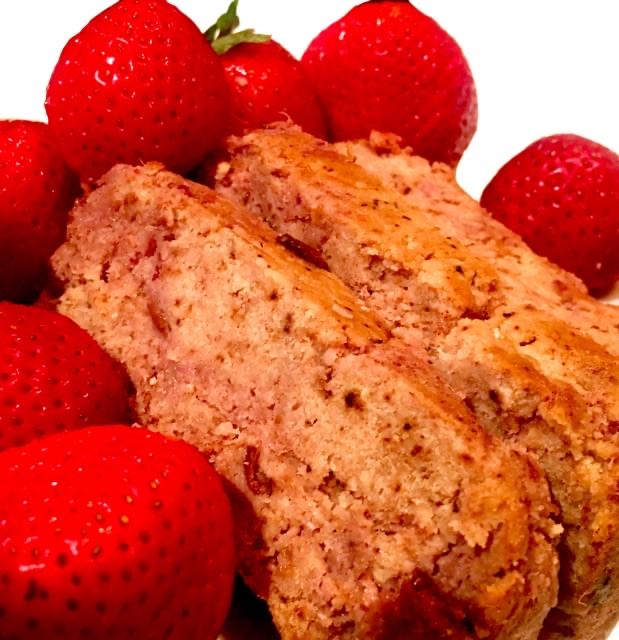
Strawberry Nuttiness Bread

by Liat Ron June 26, 2020
written by Liat Ron

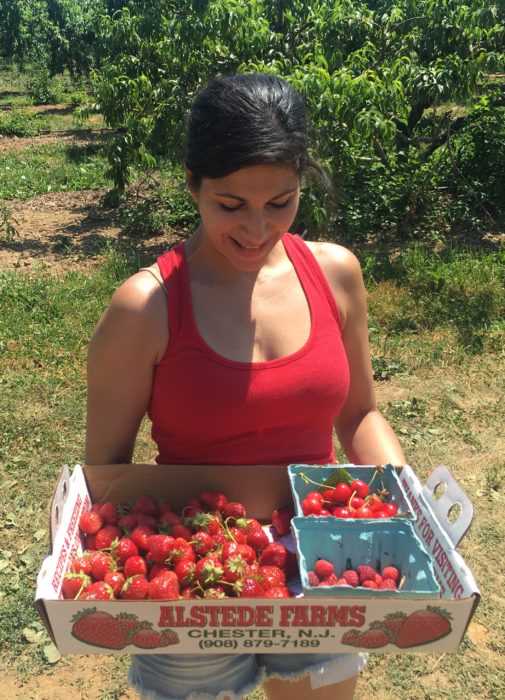
You don’t have to ransack an open field, dripping strawberry blood with your fellow quarantine-fatigued warriors in order to rush home to a strawberry bake-off with yourself but it sure does help.

bread

Too easy to finish a whole loaf on your own but try to share

I came home possessed. I needed to make something out of the boxes of strawberries that took up all of our kitchen space. As the pressure intensified every day over the last few months, I needed therapy.

strawberry bread recipe Liat Ron, strawberry picking

Aside from the gorgeous red fruit everywhere, it wasn’t a pretty look. My baking frenzy was ugly and oh so messy, just like my PMS tears when I made one batch with hemp seeds and had to watch cringing faces tell me “it tastes really healthy”. Seriously?! In my book, if healthy isn’t delicious, it ain’t healthy.

But batch after batch I was slowly led to my new recipe that’s been a hit among my harsh critical tasters , even the ones who wouldn’t voluntarily eat anything sweetened only by pure fruit (just like my naturally sweetened banana muffins).

I also learned one way to make my kitchen and adjacent area smell like a sweet, comforting, scrumptious, embrace-and-never-let-go childhood memory. Or the yummiest bed-and-breakfast aroma as you walk downstairs after an 8-hour night’s sleep. (I would pick the B&B as this type of hospitality currently sounds like a thing of the past.) It’s crazy out there, so if you want to feel like our current world is filled with love and hope, even for a fleeting moment of escape, do yourself a favor and cook fresh strawberries in coconut oil. You don’t even need to eat it to reap the mental health benefits (but you should!) Let them sizzle in the pan for a minute, close your eyes and inhale deeply. Slow, deep breaths, in and out.

You can stop now or you can take the next step and  bake this sweet, nutty, satisfying, healthy, versatile bread, which (in case you have any food sensitivity/intolerance/allergy) only happens to be gluten-free, dairy-free and grain-free. 

A Lot More than Just a Berry Good Bread

A hefty slice can function as a highly nutritious breakfast smeared with any nut butter and a side of Greek yogurt but it can also serve as your yummy, hearty, nutritious dessert topped with chocolate and/or paired with ice cream of your choice. Or you pack a slice (or two, or three) as an on-the-go energizing, wholesome snack.

I use Cuisinart Smart Stick because it’s compact and can be put away rather than take up counter space, not to mention that though small, it conveniently fits all blended ingredients in this recipe. Oh and it comes with other parts too, so you can also whisk, grind and chop but my favorite part is the hand blender, which serves me exclusively in making my pureed soups.

A note about consistency: You don’t have to use xanthan gum if you don’t have (or don’t want to have) it handy. I tried with and without and although xanthan gum acts as an excellent binder, the bread is delicious either way. If you choose to not add xanthan gum, just make sure you use a very sharp knife when the loaf is completely cool and avoid cutting thin slices so your bread doesn’t fall apart on the way to being serve.

Oh and since you only need a 1/8 a teaspoon for a loaf, do yourself a favor and don’t buy the overpriced bags, unless you bake for the masses. Now brand makes the least expensive and most conveniently packed xanthan gum I found. It’s small and expires in about three years which means I will have to bake way more than I plan to in order to use it all while it’s still fresh.

Wow, I do talk a lot.

unnamed

Strawberry Nuttiness Bread

Prep time:  15-20 mins 
Cook time: 25 mins
Total time:  40-45 mins

Yield: One Loaf 

INGREDIENTS

  • 1 tablespoon coconut oil (I like organic, virgin/extra-virgin, unrefined, cold-pressed like this one but any coconut oil will do. 
  • 1 ¼ cup fresh strawberries (cut them in half)
  • 3 medjool dates (cut to quarters)
  • ¼ cup unsalted cashews
  • 2 tablespoons walnuts
  • ½ cup coconut flour
  • ½ cup almond flour
  • 1.5 teaspoon baking powder
  • ½ teaspoon baking soda
  • (Optional) 1/8 teaspoon xanthan gum for better consistency
  • 2 eggs (or 1/2 a cup of unsweetened applesauce for a vegan version)
  • ¼ cup unsweetened applesauce
  • 1 teaspoon vanilla extract

DIRECTIONS

  1. Preheat oven to 375°F (176°C) and lightly grease a loaf pan with coconut oil. I use unbleached parchment paper for easier cleaning and removal.
  2. In a skillet over medium-high heat, cook strawberries and dates in coconut oil until sizzling and soft. Remove from heat.
  3. Mash berries and dates thoroughly in the skillet with a potato masher.
  4. Grind cashews and walnuts in your blender.
  5. Add the rest of the ingredients and blend until they all lose their individual qualities and come together…
  6. Pour batter and berry “jam” into your loaf pan and mix them together until they become one.
  7. Bake for 25-30 minutes, or until a fork/toothpick inserted in the center comes out clean.
  8. Remove from oven and let cool completely before slicing. Bread can be kept fresh in room temperature for up to 2-3 days, as long as you keep it in an airtight container. You may also choose to refrigerate (up to a week) or freeze (up to several months). Serve as a snack or as part of your breakfast or dessert. Our family prefers it warm but cold on-on-the-go works well too.
    Bon appetit!


June 26, 2020 0 comments
0 FacebookTwitterPinterestEmail
how to win an argument with your partner, marital disagreement, marital discord, fighting fair, happy wife happy life
HappinessLove and Relationships

How to Win an Argument with Your Partner

by Greg Kushnick, Psy.D. May 21, 2020
written by Greg Kushnick, Psy.D.

So you want to know how to win an argument with your partner? I’ll tell you how.

But first let me tell you what won’t work.

1. Getting in the last word.

2. Keeping score and blaming.

3. Being self-referential when you partner is expressing his or her needs (i.e., “What about me?).

4. Starting sentences with “You always…” or “You never…”

5. Putting up a wall and showing no emotion during important conversations.

6. Withholding your love as punishment.

I can list more, but I’ll stop there.

Winning the Argument

You win the argument when you acknowledge that you don’t want your partner to suffer. You win the argument when you show a commitment to your partner’s happiness. You win when your partner experiences you as listening for the gold in him or her.

You win when your partner’s needs are met. That gives you a stronger platform for asking for what you need to be happy in the relationship. If your partner is unwilling to value your needs, it could be because he or she is furious at you, chronically neglected or checked out for now.

If your needs aren’t getting met, start with giving. If your needs are rarely being met, work on your communication. If you determine that you’re partnered up with a raging narcissist, then you may need outside intervention to help you shift the balance of power in your relationship and better understand the dynamics at play.

May 21, 2020 0 comments
0 FacebookTwitterPinterestEmail
CovidHappinessIntuitive EatingParentingThe Bright Side

The Yummiest Mini Banana Muffins Recipe

by Liat Ron May 20, 2020
written by Liat Ron

This post was created about 4 years ago, before baking with bananas was trendy and before we were subjected to knowing the true meaning of living through a global pandemic. I decided to share our banana muffins family recipe with you because to us it always provides the taste of love, connection and comfort, especially during our ongoing quarantine and, of course, particularly during regular flour shortage.

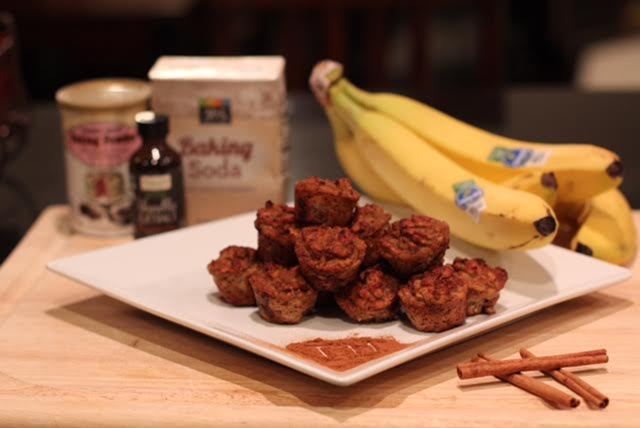
Introducing the yummiest yet most nutrient-dense muffins.

I don’t do well with recipes.

In fact, I can’t enjoy cooking unless I can spontaneously create something.

TAKING RISKS IN THE KITCHEN

It’s the one area in life where I’m an absolute gambler (high and rush included) and yes, my system makes it hard to recreate recipes, but I enjoy the reinvention process in my twisted way, especially when “accidents” result in better-than-the-original deliciousness.

My process usually consists of researching the type of ingredients I’m inspired to use and making sure my crazy ideas will live in peace in one dish.

I’m no chef but I must have fun when I cook. Being an artist, I guess it will remain the only way for me to create anything in my kitchen, especially during a global pandemic that asks us all to spend more time than ever at home, and has me practically living in the kitchen.

Now, when it comes to baking, the stakes are high (AKA Are you crazy?!) Maybe that’s why I prefer cooking over baking. You just can’t mess with exact measurements and ingredients unless you’re trained. Or…can you?

Here’s the thing. What’s the worst that could happen? My baked goods won’t turn out to be a masterpiece? So what? Guaranteed, one or more members of our family will find them edible. It’s a small price to pay for the liberating fun I have in return, not to mention the gambling rush, not to mention the welcomed mental health component of enhancing faith and trust in myself. And so began my long personal journey with my go-to mini banana muffins…

I still have the original recipe symbolically crumpled up somewhere in the kitchen (never throwing that away), but at this point it’s not even a distant cousin of my current version, which is the simplest, tastiest, most nutrient-dense baked good I have created.

MY FAMILY, THE EAGER MUFFIN TASTE TESTERS

Safety first, I always practice on my family before anyone else. It’s been a little tricky because my 2.5 year old seemed to love all versions (the process began when she was 1), but my honest husband always saved the day.

Every batch I made was different, and unlike my typical cooking frenzy, this time I took down notes and modified accordingly. However, despite my utmost efforts to be an organized baker, now will be the first time I actually take the (or any) recipe out of my head and type it on my computer.

I am pleased to share with you the latest (though can’t swear the final) version of my Easiest Tastiest Banana Mini Muffins Recipe, but before we proceed, keep in mind that the only sweetener used is fruit. You will be pleasantly surprised by the level of sweetness BUT in case you need real sugariness, feel free to add up to a 1/4 cup of sugar, though I highly suggest using the original recipe as your first round for comparison.

CHILD LABOR OR LOVE – MY KITCHEN HELPERS

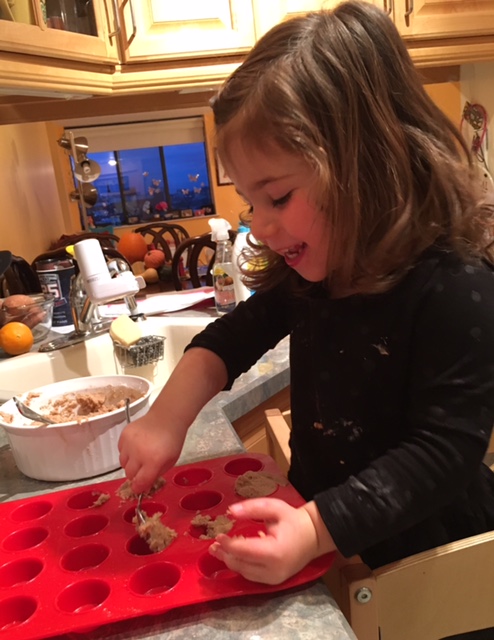
On another note, I have enjoyed working with my new devoted assistant in the last couple of months. We use our beloved GuideCraft Kitchen Helper, which is extremely safe, stable and easily tucked away in the kitchen when not needed.

I also can’t recommend enough the one item that changed how I feel about baking muffins, not to mention the clean-up (and with a toddler in the kitchen, every cleanup shortcut is the ultimate blessing).

My staple is this Silicone 24-Mini Muffin Pan . It’s a very affordable set that also includes a regular 12-muffin pan in case you’d like to make bigger muffins (same recipe). Silicone is the mother of all nonsticks, but also the safest (food grade), most durable and extremely resistant to high temperatures (500 degrees Fahrenheit).

And once again, easiest cleanup. The muffins practically slide off. It’s like a little miracle.

One more staple is my coconut flour. Who knew that not all coconut flours are created equal? I have reviewed the nutritional facts on all of them and it turns out that Bob’s Red Mill Organic High Fiber Coconut Flour is the most nutrient-dense, if you will. For instance, it offers 10% of the recommended daily iron intake. None of the others offer any iron at all. And the way it smells when you open the bag also tells a story…

You don’t have to be a parent to enjoy baking, eating or feeding these mini-muffins, but it sure is a fun, easy, educational and bonding activity with your children. And it doesn’t create much of a mess at all. This particular recipe is easily “contained” and is guaranteed to not wreak havoc on your kitchen. We also enjoy turning these muffins into “cupcakes” with all sorts of delicious improvised frostings, but for this extra richness you pay with a little, just a little, extra mess.

banana muffins, kitchen helper, almond flour, coconut flour, superfood, baking with toddler

Our Kitchen Helper on Her Kitchen Helper

You think I’ve said enough?…Let’s eat.

Here it is:

THE EASIEST, YUMMIEST, SWEETEST YET UNSWEETENED BANANA MINI-MUFFINS

Prep time: 10 mins (Note that kitchen helpers help make it longer….)
Cook time: 25 mins
Total time: 35 mins

Yield: 24 mini muffins

INGREDIENTS

3 large ripe bananas
2 eggs
1/4 cup unsweetened applesauce
1 1/4 teaspoon vanilla extract
1 tablespoons unsweetened vanilla almond milk
1/2 cup almond flour
1/2 cup coconut flour
1/4 teaspoon ground nutmeg
1/2 teaspoon ground cinnamon (less if you’re not a big fan)
1 1/2 teaspoon baking powder
1 teaspoon baking soda

FROSTING CHALLENGE: Mix cacao, honey and almond butter (coconut oil optional.) Play around with the ratio. Keep tasting. Pick your favorite level of sweetness and texture. Here you go. You created a recipe!

DIRECTIONS

Preheat oven to 375 degrees Fahrenheit.
In a medium mixing bowl, use a potato masher to mash the bananas. Add all wet ingredients and mix well after each one.
Slowly add the flour into the bowl and continue to mix well.
Add nutmeg, cinnamon, baking powder and baking soda and mix until batter is smooth.
Divide the batter between the 24 cups (or 12 if a regular muffin pan) . Bake muffins for 25 minutes, or until a toothpick inserted into a muffin comes out clean.
Now clean up your drool and step away from the muffins if you want to watch them slide off. Let them cool in pan on a wire rack for at least 30 minutes before removing them. Muffins can be kept in the fridge for 3 days (I’m okay with a week if you are), longer in the freezer.
Bon appetit!

Note: This post contains affiliate links.

Tags:almond flour, banana muffins, coconut flour, dessert, Featured, gluten-free, grain-free, healthiest muffins, kitchen, low-calorie, mini-muffins, paleo, recipe, silicone pan, superfood, `baking

May 20, 2020 0 comments
0 FacebookTwitterPinterestEmail
relationship tips for quarantine, five conversations to strengthen relationship, dr Greg Kushnick, what to say to your partner
CovidHappinessLove and Relationships

5 Urgent Conversations to Protect Your Relationship Under Quarantine

by Greg Kushnick, Psy.D. April 20, 2020
written by Greg Kushnick, Psy.D.

Life under quarantine can be wildly challenging for even the strongest relationships. This can be a dangerous time for couples who have issues with communication.

Have you adjusted as a couple to the new normal? Do you feel like your mental health needs are being validated by your significant other?

This post is designed to guide you and your partner toward topics of discussion that can bring you closer.

We’re not our normal selves these days. It often feels like there’s next to no psychological room to breathe. Work obligations that typically offer a natural pause from constant exposure to our partners are temporarily unavailable.

How to Know What Your Quarantined Relationship Needs

In quarantined life it’s easier to neglect your partner’s needs because we’re all self-soothing more to get through this unusual time, but the consequences of relationship neglect are potentially more damaging than ever. Let’s face it — it’s hard enough to figure out what YOU need right now, let alone what your partner needs.

If you have kids, your partner’s needs naturally get bumped down the priority list, but this is no excuse to neglect your relationship.

The truth is that if you avoid working on your loving bond at this unique time, you run the risk of drifting further apart.

There’s no space for resentment either. Keeping score will amplify resentment exponentially. Fights will only get nastier.

The great news is that it doesn’t have to be this way.

Watering the seeds of your bond under quarantined conditions can cause greater growth than under normal conditions. You will always remember this strange time, and caring for your relationship counts even more. Let the quarantine be a positive memory of love and of growing together. Here are some suggestions for jumpstarting that process.

You must be willing to invest more in the needs of the relationship. Consider that your relationship is like a baby that needs the right conditions to grow.

How Much Should You Invest in Your Relationship?

So how much time and effort should you put into your relationship? Well, it depends.

I’m not a fan of the idea of surviving in any way you can when it comes to preserving your relationship. You can neglect other parts of life, but damage to your bond may be hard to reverse.

If your relationship was rocky prior to the Covid-19 pandemic, you will need to invest more to keep the peace and function as a cohesive unit.

The bottom line is that couples who actively work on their relationship will come out of the Covid-19 pandemic with a stronger bond than ever before. If there’s solid teamwork and healthy communication under the threat of an outside force such as Covid-19, then you’re likely to reflect warmly on your relationship for years to come.

Five Conversations for Improving Your Relationship During the Quarantine

Here are five conversations to have with your partner. They represent a solid start for a maintaining or strengthening your connection through the quarantine and beyond. Think of them as conversation starters aimed at opening up the lines of communication.

1) “What do you need from me that you’re not already getting during the quarantine?“

Have you asked this question yet? Do you think you know already the answer? Too many assumptions about your partner’s needs can create enormous cracks in the relationship. Just ask. It will be appreciated.

Don’t just expect that your partner will reciprocate the question. Just offer it. Don’t keep score. Model what you want your relationship to be.

Maybe he or she needs a bit more time away from the kids, even 30 minutes. Or it’s less exposure to the news in bed.

Just ASK. Be curious. Your partner will appreciate it.

2) “Are we on the same page with how daily activities and responsibilities are being handled?”

This one applies more to parents. Are you or your partner harboring bitterness about the assignment of responsibilities at home? If so, share it and work together to both understand and accept each other’s strengths and weaknesses, but also challenge each other with love and compassion to push a little harder.

Are you sinking under the weight of too many tasks? If so, share what you need from your partner while holding hands. Agree to check in with one another in a few days if new commitments are made.

3) “Are we acknowledging what each of us is feeling during these uncertain times? Are we paying enough attention to each other’s mental health needs?”

This is your chance to share how your partner may be invalidating what you feel or vice versa. Is there too much toxic positivity from one partner that is shaming the other for feeling anxious or scared? Do you need a bit more of your partner’s undivided attention?

Mirroring Exercise: Share for a minute or two what you’ve been feeling. You partner then has to repeat what he or she heard you say. Then he or she asks, “Is that an accurate summary of what you feel?” If so, switch roles. If not, correct your partner’s understand of how you feel.

4) “Are we being hurt as a couple by allowing someone outside our relationship to violate our boundaries?”

Are your parents or other family member demanding too much of your attention? Are they repeatedly reprimanding you for ignoring them? Does it feel like a family member is completely draining your energy over the phone or video chat?

Is someone outside of your immediate family making you feel bad, guilty or shameful on a frequent basis? Is one of you sharing too much sensitive information with an outside party that would offend the other partner if they knew what was being said? Your job is to protect your partner, and that includes protecting his or her privacy, unless there is abuse occurring.

Boundaries are a huge part of maintaining a healthy relationship. Put your heads together to come up with a plan to deal with boundary violations. It will make you feel much more supported by one another. Help each other problem solve to strengthen the boundary around the original family unit (the two of you).

5) “Are we working hard enough to make time to check in with one another without any distractions?“

If you’re not already having frequent and predictable check-ins with one another, now is as good a time as ever. Schedule a weekly State of the Union Time.

During this time, each of you speaks for an uninterrupted 10 minutes. Time it on your phone. Say nothing while your partner speaks, even if you disagree with something said. Listen attentively without any screens present. In fact, listen for the gold in them.

The goal is to share what’s on your mind, including feedback for your partner, requests, new commitments or thoughts about anything. Take five minutes to jointly reflect on what was said. Then drop it!

Have a separate conversation about what is getting in the way of checking in with one another. Put your heads together to prioritize the State of the Union ritual. Your relationship needs it no matter how close you feel to one another.

Please note that these five conversation are designed to help you get through the quarantine. Consider couples therapy if these conversations lead to unresolvable arguments or resentment. You can participate in the therapy right from the comfort of your home!

Have a safe and healthy quarantine!

April 20, 2020 0 comments
0 FacebookTwitterPinterestEmail
kids laughing, no screens, future of screen addiction, liat ron, greg kushnick, techealthiest, the bright side, silver lining, Covid-19, coronavirus
CovidHappinessParentingThe Bright Side

The Marvelous Consequence of Your Kids’ Screen Overuse Under Quarantine

by Liat Ron April 1, 2020
written by Liat Ron

Nature Valley created a powerful ad a few years ago about the horrifying effects of screen time on children. It stated, “Nature has always been a part of childhood. Let’s make sure it doesn’t stop with us.”

The negative effects of excessive screen time on children has been well documented in recent years. Techealthiest has taken an active role in analyzing the positive and negative consequences of screen overuse. However, our collective adjustment to the Covid-19 pandemic hints at a drastic change in our society’s relationship with screens that couldn’t have been predicted — something that will have a ripple effect for many years.

The Silver Lining Is..

Ladies and Gentlemen, here’s one shining Bright Side for you. The battle to reposition Nature toward the center of childhood will not stop with us as adults!

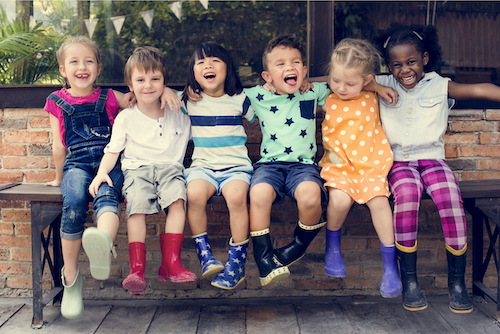
Our children will be the generation that breaks out of screen/personal technology dependency. They will discover the world outside of screens in profound ways.

The current social isolation necessitated by the quarantine has transformed screens into our saviors. Screens satisfy our longing to connect with the outside world. They save us from ourselves, neutralize loneliness, entertain us and keep our children occupied most of the day. Screens allow our kids to maintain a connection to teachers, friends and family.

Parents appreciate like never before the four minutes of freedom that a funny video creates. Live daily Cincinnati Zoo videos, Doodle with Mo Willems and other incredibly generous artists, educators and companies have saved families at home from imploding.

Thank God for Facebook Live, Zoom, Governor Andrew Cuomo’s reassuring speeches and anything and anyone serving as screen comfort. Thank God for Netflix and good ole escapist TV. We are blessed to have screens. Imagine a pandemic without them. You can’t.

The World A.C. (After Coronavirus)

When we crawl out of the quarantine and reemerge into the real world after many weeks of the most extreme screen dependency anyone has ever experienced, rest assured your children will all share a renewed wonder that would have never happened if it weren’t for this long period of virtual existence.

Our children will gain a new perspective that we wouldn’t have been able to teach otherwise. They will rediscover the magic of nature. Their world will be bigger than ever.

Technology will not mute the need to relate to people IRL…In Real Life. Think of this relatively new term coined by the omnipotent social media- IRL. A new meaning will be joyfully added to this term. All they want will be IRL. Their insatiable affinity for the screen as we know it will be replaced by a brand-new appreciation for real connection. Anything virtual is going to become a back-burner, second option, de-prioritized form of connection. Kids will relish in the real.

They will cherish fresh air, running and playing outside with friends. It will take less effort to achieve human connection. Social media as a way to stay in touch will feel profoundly unsatisfying.

Who Will They Become?

Let’s take it one step further. What kind of adults will our children become? Smarter and maybe even happier than us. They will know the power of screen dependency thanks to the priceless perspective born from this wild overdose of screens as a means of surviving the quarantine. They will represent the refreshing new generation of brilliant, curious thinkers and discoverers. They will change the world in ways that would not have been accessible to them had they not experienced the current screen overuse.

Life will never be the same. That’s the Bright Side.

By Liat Ron and Dr. Greg Kushnick

April 1, 2020 0 comments
0 FacebookTwitterPinterestEmail
Quarantine Parenting tips for families with small children
CovidHappinessParenting

9 Sanity-Saving Quarantine Tips for Families with Small Children

by Liat Ron March 22, 2020
written by Liat Ron

If your kids aren’t already driving you absolutely crazy during this quarantine, congratulations! Your’e in a league of your own. The only way to maintain your sanity during this wildly challenging time is to be strategic. A little planning and foresight will go a long, long way in your family’s temporary, new reality.

We have small children and, of course, we’re learning as we go, but we’re also following certain rituals and guidelines that are already making a huge difference for all of us. Some of these strategies we enact are a natural extension of our parenting approach B.C. (Before Corona), and some of them have been modified based on our adjustment to life during the Covid-19 pandemic. (For more on your adjustment to a new reality, here’s our post on mental health strategies for managing the quarantine.)

We just gave our kids an extra large snack so we would have the opportunity to get these ideas onto a post on Techealthiest. And we definitely won’t complete it until after they go to bed. Yes, we’re all in this together.

The good (and slightly bad) news about having small children (meaning under about seven years old) is that they are just happy to be with you. Also, they don’t fully comprehend what’s going on outside unless you have poor boundaries around sharing adult information, but that’s a topic for another day. The bottom line is that everyone wins when you find your sanity. Even Andrew Cuomo, the Governor of New York, agrees.

Unfortunately, your tolerance for managing your kids under a strict quarantine is likely to reduce over time. This is why guidelines are necessary. You design a plan and then adjust as you test the reality of family life. This approach is likely to deliver clearer expectations and predictability to your children, which will make life under quarantine so much more tolerable for everyone.

9 Ways to Make Life Easier with Small Children During the Quarantine

Here are a group of suggestions that you may find helpful. Modify them to fit your family’s specific needs and circumstances.

1. Be a team with your partner in front of your kids.

Now more than ever it’s essential that you show stability and predictability in front of your kids. Being on the same page with your significant other allows for parental messages to be delivered more clearly and understood more quickly.

If you and your partner disagree, make an agreement to discuss the issue when and where your kids cannot hear you. Avoid making secret agreements with your kids that your partner is left out of. Remember, you set the tone in the household!

2. Create a world full of sanity-saving activities that worked in the past.

Apply anchors from normal life to your quarantined life. If it worked for you before and you can do it at home, recreate it now. For example:

  • Stick with your exercise routines via Zoom/Facebook & Instagram Live, or in any other way that will allow for connection with the outside world, whether through live streaming from your studio/gym or even Zooming with friends. It’s best to choose live over pre-recorded videos.
  • Set virtual social time with friends and family: Happy hours, double date nights, girls’ nights, guys’ nights, parties, celebrations, game nights, play dates and literally any social activities you can replicate at home. Create a sense of a rich social life. It may feel contrived at first but don’t give up. It may be end up being your number one mental health savior!

3. Create a daily schedule as a framework with no ambitious expectations. Expect it to collapse.

Your children need this for their mental health. Create daily schedules five days a week, especially when homeschooling is involved, as well as online enrichment opportunities for your kids throughout the day. Don’t forget to make it fun for everyone and certainly include free independent play.

Remember not to put pressure on yourself to follow them perfectly. You may create your schedule the night before or first thing in the morning and share with your kids right before breakfast. Your daily schedules are designed to create a sense of order, structure and security so you don’t find yourself feeling lost, anxious and perplexed throughout the day.

The most important thing to remember is that your schedule works for you and not the other way around, which means flexibility is key. Too many decisions on the spot will overwhelm you. Free yourself of that pressure with a schedule.

Allow the weekends to flow with lightly structured freedom. Create family memories, allow for plenty of unstructured playtime, rest, recover, recharge and practice types of self-care you may not be able to maintain during the week.

4. Family traditions are your friend!

Now, more than ever, it’s important to continue your family traditions. You have a golden opportunity to maintain a sense of normalcy. It will do wonders for your children’s mental state, as well as your own. Whether you repeat a weekly meal (Sunday dinner, Shabbat dinner, Taco Tuesday), movie night or any other home activity that you share as a family on a regular basis, keep it up!

5. Families who eat together will be happier quarantiners. Period.

This is an opportunity to practice what is always recommended. Let’s all remember some of the benefits of family meals: We bond, connect, laugh and share the pleasure of eating foods that we love. Now, more than ever, family meals offer us incredible comfort, the chance to open up about our emotions, check in with each other and lean on each other’s coping skills. The idea of family meals includes serving family-style rather than as a short order cook. (More on this topic coming soon on Techealthiest.)

That being said, we actually recommend eating at least one meal a day, ideally lunch, away from your kids. Eat alone or with your partner, while your kids nap, during a work assignment or, yes…in front of mindless TV. You need it. You deserve it. Use the time to reconnect with your adult thoughts and emotions.

6. Virtual babysitters are reality’s best friend.

Set up Zoom/Facetime calls for your kids with close family members. This can be structured into your daily schedule or randomly set up when you feel too overwhelmed. Remember to always ask for permission. Everyone is struggling to find their rhythm these days, and so as loving as they are, your family has to be willing and prepared for such “babysitting” sessions.

7. Code word: “Get me away from these kids before I regret what I say or do.”

You will have moments when you feel like you’re on the brink of collapse… physically, mentally or emotionally. You will feel like you cannot go on for a single second longer without at least a few minutes to yourself. These moments deserve a code word.

Only your partner will know this word. Make it a good one. Ours is currently “BZZZZZZ.” It signals to your partner “I’m off the watch. Take over NOW!” Extra points if you ask for or request a specific timeframe for your return.

Your sense of control will increase with the comfort of knowing that you have a way out if you really need it. If there’s no room to escape to, the bathroom is always the perfect default. Leave the scene. Take deep breaths. Meditate. Take a power nap. Chat with a loved one. Journal. Take a walk around the block. Sit in silence or whatever you need at that particular moment. Upon entering your alone time and space, ask yourself: What do I need right now? Listen to what your body and soul are asking for. Answer with the activity that will best help you achieve what you need.

And at the risk of stating the obvious, always turn to tag-team mode WHENEVER one or both of you near your breaking point.

8. Repeat after me: There is no room for guilt! Repeat.

Let go of the guilt for choosing to care for your own needs, especially the need for space. You are going to have a shiny, new set of needs unique to the quarantine. Don’t judge yourself.

This is a new reality for all of us. We are collectively learning how to navigate life for the next few months. Be gentle with yourself and allow yourself to feel whatever comes up for you. Once you honor yourself with acceptance of your needs, you will have the clarity to find ways to fulfill those needs. Be mindful of the role modeling in your household. Your children, even in these uncertain times, should see a parent who tries to satisfy their own emotional needs.

9. Daily scheduled or impromptu dance parties for all family members.

Call it therapy….dance therapy for all! Dance is a fun, joyful activity that functions as a brain break while intensifying family bonding. It offers us the invaluable gift of getting out of our heads. It releases much-needed endorphin rush, a mental and emotional high that makes everything a little easier. Its therapeutic effects are immeasurable.

You will get through this time and one day…hopefully, possibly, maybe…your kids will reflect fondly on this time in their lives and it will be all because of you. Good luck with our suggestions.

Best of luck with these ideas,

Liat Ron

P.S.- This is my latest project: Fear and Now, a groundbreaking documentary feature film on Hypnobirthing.

March 22, 2020 0 comments
0 FacebookTwitterPinterestEmail
the bright side, creating positivity, covid-19, dr Greg Kushnick, Liat Ron, silver lining, hope, pandemic, mental health strategies during coronavirus
CovidHappiness

Presenting the Bright Side Series

by Greg Kushnick, Psy.D. March 22, 2020
written by Greg Kushnick, Psy.D.

We are all saturated with bad news, apocalyptic sensations that expand and contract along a baseline fear of what’s to come. We are adjusting slowly to life in isolation with most of our mental bandwidth taken up by just getting through the day. As a result, the silver lining is not visible yet. If you’re not practicing behavioral and mental strategies to generate positivity during the COVID-19 pandemic, you’re probably not honoring your mental health needs enough.

Presenting the bright side.

Here at Techealthiest we decided to dedicate a series on the light at the end of the tunnel. We are offering a way to create light even when we are still in the tunnel. This series is aimed at lifting your spirits, opening your mind and offering boundless hope. Your mental health depends on it. Let’s get started!

March 22, 2020 0 comments
0 FacebookTwitterPinterestEmail
coronavirus pandemic, mental health, emotional immune system, dr greg Kushnick, coronavirus stress, anxiety, Techealthiest, self-talk, covid-19
CovidHappiness

Essential Mental Health Tips for Managing the Coronavirus Outbreak

by Greg Kushnick, Psy.D. March 18, 2020
written by Greg Kushnick, Psy.D.

Social distance and food storage are occupying much of our headspace these days, but it is just as important to prepare for the mental health challenges that are likely to arise in the coming weeks.

The way I see it, we have no choice but to allocate some of our inner resources toward making smart mental adjustments that complement temporary but necessary lifestyle changes.

In this post, I will cover a few essential, actionable steps you can take to bolster your emotional well-being. These tips represent a starting point for managing your mental health during this strange chapter in our lives.

You Need A Strong Emotional Immune System

First, consider that you have an emotional immune system designed to help you deal with emotional distress, including anxiety, stress and depression.

What is an emotional immune system? It is the part of you that manages your mental response when when potential threat is introduced. Currently, the most common threat to our mind is the fear of us or the people we care about contracting COVID-19. I will assume that you are taking the appropriate preventative steps.

The next threat would be your news consumption. Constant exposure to breaking news about COVID-19 will overwork your emotional immune system, leaving you anxious, even panicked, at random moments. You may justify your constant news exposure by thinking that being informed gives you a greater sense of control, but this is simply untrue.

My concern is that the constant flow of troubling information available on our screens functions like a virus of the mind.

Your cortisol levels are likely to skyrocket, and this is not healthy. Your body does what the mind tells it to do. Sounding the alarm in your body with messages of fear and helplessness may impact your body’s immune system.

This is why it is so important to restrict your exposure to social media and news sites since they bombard you with mostly bad news.

Chatrooms are the less obvious offender. I recommend that you propose to a ban on introducing any breaking news while you are supporting one another in chatrooms and group messages. Any emotional gains from virtual support usually get cancelled out when one of your introduces more bad news.

Consider the following: Most self-care activities, including meditation, journaling, online therapy, sitting with feelings and other behaviors meant to give you the feeling of control will be less effective if do not reduce your intake of news that usually tells you what to worry about.

Life is harder to manage with so many cues to worry and this is just not healthy for you. I recommend limiting social media and news intake to 2-3 times a day at most, and none before bed.

Cognitive Strategies Go Nicely with Less News Consumption

Once the news floodgates are well managed, you can do more effective inner work. This brings us to a cognitive strategy that can strengthen your emotional immune system. It all comes down to what you tell yourself. As I said, your body is listening very carefully to the messages.

Start paying greater attention to how you talk to yourself when you think about the virus. If you find that you are frequently telling yourself sound something like, “I can’t handle this,” or “this is too much,” then you need to adjust this self-talk.

When you are tell yourself that you cannot handle something, you are telling your body what to do. Sound the alarm! Fire up the fight-or-flight response.

The good news is that your mental habits can be altered by actively substituting alarming messages with self-talk that promotes resilience and hardiness.

Even if you first feel anxious and tell yourself you cannot handle something, you still have the opportunity to say to yourself, “That reminds me of the opposite….” and then state something positive.

I like to say to myself, “No matter what happens I will be ok.”

A variation on this is “I can handle this” or “we will get though this” or “this this hard but we can do it.” Come up with affirmations that work for you. It might sound simplistic but it can be very effective over time. Just stick with it.

Say these messages to yourself at least 50 times a day, including in response to noticing negativity.

Take this self-soothing method seriously even if you only connect with the messages on an intellectual level. Over time your emotional side will join the resistance.

You have the power to alter your mind and body’s response to new information. Use that power and you will increase your faith in your ability to cope, which reduces the frequency of anxious moments.

Refuse to be a passive recipient of bad news. Fight any helpless state with this mental exercise. If you need to vent your anxiety, which is a valid reaction to some of the news we are learning, then call a friend or chat with another adult at home. In addition, you can do things that make you feel in control. Worry about any new onset of OCD later.

It must be said that sometimes the feeling may be so strong that all you can do is sit with it, engage in distracting behaviors or find a way to self-express.

In addition, try one or more meditative approach, even if it means enlisting one of the meditation apps like Calm or Headspace, the latter of which is free right now. Of course, it is normal to feel nervous. We all do to some extent, but you have a choice to turn states of helplessness and stress into empowerment and strength.

Get used to conducting check-ins with your body as you read the news when disturbing thoughts pop into mind. Look for bodily signs of tenseness, stress and anxiety. If you they are present, begin to parent yourself through negative mental states with messages of being able to handle this temporary phase in life. The more you experience yourself bringing negative states into the positive range, the more prepared you’ll be for life’s challenges.

Journaling can also be quite helpful when you are feeling nervous. Write down everything that you are worried about in a given moment. It truly helps you to gain perspective and calmness. One further journaling option is to keep rereading your entry containing all of your worries until the words have less emotional power over you.

And remember, do not underestimate your mind’s contribution to your body’s ability to fend off foreign germs.

Check in soon for more tips on managing your anxiety in the time of adjustment.

Good luck.

(Disclaimer: The information shared in this blog post is for informational and educational purposes only. Reading this post does not constitute a therapeutic relationship with the author.)

March 18, 2020 0 comments
0 FacebookTwitterPinterestEmail
narcissistic partner, narcissistm, signs of narcissism, are you a narcissist
HappinessHealthy Narcissism

9 Signs You’re in a Relationship with a Narcissist

by Greg Kushnick, Psy.D. February 18, 2020
written by Greg Kushnick, Psy.D.

(This article was originally posted on Huff Post as 9 Signs You’re in a Relationship with a Raging Narcissist.)

I’m going to talk about the unhealthy kind of narcissism so you can get a clearer idea of what we mean by healthy narcissism.

If you suspect (or already know) that you are in a relationship with a narcissist, it’s important to work on the unhealthy ways in which his or her narcissism is manifested.

Here are nine signs you and your partner need to work on the dynamic in the relationship.

1) Your partner can’t tolerate your success.

One giveaway would be if you and your partner cannot be successful at the same time. Instead, you always find yourself in a one-up-one-down situation in which one of you can only thrive at a time.

2) You have suspicions that your partner lacks basic empathy.

How many times have you witnessed your significant other insulting other people with very little justification for his harsh words? (This can be a sign of other personality disturbances as well.)

3) Your partner has trouble supporting you emotionally during small, everyday situations that upset you, but when terrible events are happening, he or she loves the feeling of being needed and steps into the supportive role with ease.

Some narcissists require you to need them in order to ignite their powerful, caring side.

4) Your partner is extremely successful in his or her career and it seems like he or she has stepped on other people’s heads to achieve an elevated status or title.

Yes, many narcissists run the show. This is where narcissism can be a blessing as much as a curse.

5) More than a few people have described him or her as “self-referential.”

Yes, another dead giveaway is when your partner is constantly thinking or saying, “What does this say about me?”

6) A textbook sign of narcissism is that your significant other constantly needs to be admired.

Does it seem like your partner looks inward to find value or does the world need to reflect his or her greatness…all of the time?

7) It’s implied that you always have to let go of your needs and meet your partner’s expectations for how a particular situation is supposed to happen.

Do you have an equal say in what you do together? Is he or she constantly punishing you for not meeting expectations?

8) Your partner shows a huge blindspot in recognizing how his or her actions impact other people.

This is also about empathy, but I like to talk about it more in terms of someone lacking the ability to place him- or herself in your shoes and see the world from your eyes.

9) Your partner tends to speak with pathological certainty when sharing his or her own opinions.

Pathological certainty is when someone seems like they’re in the business of making other people bad or wrong. It’s as though they’ve made the choice to be right instead of happy. Many narcissists always have to be right. This is the unattractive side of narcissism.

Equally as important is figuring out if you’re, in fact, the narcissist in the relationship. If this may be the case, consider therapy as soon as possible, especially if you’re invested in living a happier life and having a healthier relationship.

More reading:

The official way to diagnose Narcissistic Personality Disorder (NPD).

February 18, 2020 0 comments
0 FacebookTwitterPinterestEmail
Newer Posts
Older Posts

Inside Your Personal Digital World

  • What Your Posting Style on Social Media Says About You

    April 21, 2019
  • A Secret Door to Happiness is Written on Your Wall

    October 2, 2015
  • The Real Reasons You’re Stingy with Your Facebook Happy Birthday Wishes

    July 3, 2015

Copyright 2025.  We are dedicated to protecting the privacy of our readers.


Techealthiest | The Technology of Mental Health
  • Mental Change Tech
    • Happiness
      • Habit Shifter
      • Smartest Future
    • Stress
      • Human-Phone Bond
  • Parent Thing
  • Social Media Lama
    • Love Optimizer
    • App Dating
    • Healthy Selfie
    • Healthify Facebook
    • Enlightened Upgrading
  • Narcissist Mgmt
  • Phone Love
  • Covid
    • The Bright Side
  • About
    • About Techealthiest
    • About Dr. Greg
    • The Techealthiest Mission
    • Privacy Policy
    • Terms of Use
    • Contact
Techealthiest | The Technology of Mental Health
  • Mental Change Tech
    • Happiness
      • Habit Shifter
      • Smartest Future
    • Stress
      • Human-Phone Bond
  • Parent Thing
  • Social Media Lama
    • Love Optimizer
    • App Dating
    • Healthy Selfie
    • Healthify Facebook
    • Enlightened Upgrading
  • Narcissist Mgmt
  • Phone Love
  • Covid
    • The Bright Side
  • About
    • About Techealthiest
    • About Dr. Greg
    • The Techealthiest Mission
    • Privacy Policy
    • Terms of Use
    • Contact
@2021 - All Right Reserved. Designed and Developed by PenciDesign