Techealthiest | The Technology of Mental Health
  • Mental Change Tech
    • Happiness
      • Habit Shifter
      • Smartest Future
    • Stress
      • Human-Phone Bond
  • Parent Thing
  • Social Media Lama
    • Love Optimizer
    • App Dating
    • Healthy Selfie
    • Healthify Facebook
    • Enlightened Upgrading
  • Narcissist Mgmt
  • Phone Love
  • Covid
    • The Bright Side
  • About
    • About Techealthiest
    • About Dr. Greg
    • The Techealthiest Mission
    • Privacy Policy
    • Terms of Use
    • Contact
Welcome to the digital makeover of Techealthiest!
Monday, March 16, 2026
Techealthiest | The Technology of Mental Health
  • Mental Change Tech
    • Happiness
      • Habit Shifter
      • Smartest Future
    • Stress
      • Human-Phone Bond
  • Parent Thing
  • Social Media Lama
    • Love Optimizer
    • App Dating
    • Healthy Selfie
    • Healthify Facebook
    • Enlightened Upgrading
  • Narcissist Mgmt
  • Phone Love
  • Covid
    • The Bright Side
  • About
    • About Techealthiest
    • About Dr. Greg
    • The Techealthiest Mission
    • Privacy Policy
    • Terms of Use
    • Contact
Techealthiest | The Technology of Mental Health
  • Mental Change Tech
    • Happiness
      • Habit Shifter
      • Smartest Future
    • Stress
      • Human-Phone Bond
  • Parent Thing
  • Social Media Lama
    • Love Optimizer
    • App Dating
    • Healthy Selfie
    • Healthify Facebook
    • Enlightened Upgrading
  • Narcissist Mgmt
  • Phone Love
  • Covid
    • The Bright Side
  • About
    • About Techealthiest
    • About Dr. Greg
    • The Techealthiest Mission
    • Privacy Policy
    • Terms of Use
    • Contact
Copyright 2021 - All Right Reserved
happiness tips, how to be happy, mental exercise, dr. Greg Kushnick, judgment, stress management, mental freedom, mental health
Happiness

This Quick Mental Exercise Will Make You 20% Happier

by Greg Kushnick, Psy.D. January 5, 2020
written by Greg Kushnick, Psy.D.

After helping thousands of New Yorkers achieve success with their therapeutic goals, I’ve learned a shortcut or two for finding psychological lightness and increased headspace.

I’m talking about the kind of headspace that can only lead to good things.

If practiced and taken seriously, this hack could potentially stimulate the following mental health benefits:

  • a reduction in unhealthy forms of social comparison
  • more experiences of being grounded via humility and perspective
  • a greater sense of connection to people
  • relief from some forms of depression
  • improved anger management

That’s a HUGE benefit stuffed into a quick but powerful intervention.

Here’s the happiness hack….

Every time you think or declare out loud a judgment against yourself or someone else, try saying to yourself, “Ahh, here goes —insert your name— judging again!” or“Oops, here I go judging again.”

Keep doing this even if it happens 100 times in a single day. You can be discreet and say it under your breath or in your mind.

This hack is practical and universal.CLICK TO TWEET

You’ll never be able to stop yourself from judging completely. It’s human nature, but what you CAN do is notice that you just judged and remove your immediate investment in it so that you don’t harm your mind and body.

Who are we to judge?

You gain nothing by judging.

There is no winning with judgment, only losing. It’s a complete illusion that you are teaching people a lesson by judging them out loud.

The only lesson to get is that you are essentially punching yourself in the head when you judge.

Judging other people is a strategy for artificially making yourself feel superior to other people by allowing you to look down on them.

Judgment breeds depression and it kills cells in your body. You’re essentially turning against yourself when you’re in the business of judgment. Judgment repels people and makes you more alone than you already may be.

Let the Resentment Go or Else

People who tend to have trouble letting go of resentment or who believe that the world owes them something tend to judge the most. These types of people can make great strides by practicing this mental exercise.

If you doubt my advice, just try it for one day. Every time you judge yourself or others, point it out to yourself. You WILL feel something different.

If you’re accustomed to the illusion of power and superiority that judgment can bring, then removing judgment might make you feel stripped of your defenses at first. Stick with it and you will notice the difference in your mood.

This ONLY works if it’s repeated.

Plus, if you combine this habit with a commitment to personal growth, you’ll be a powerhouse of happiness.

There are thousands of directions I can go with this. but for now I will leave you with three closing comments…

First, I feel compelled to repeat that the true power of this hack is accessed through repetition and a keen awareness of the heavy price you pay for judging. The ability to separate yourself from your automatic judgments takes practice. “Here I go judging again” must remain close to consciousness for you to remember to challenge a judgment. Repetition allows for easy access to this thought.

In essence, it’s ok to become addicted to this thought. Without a practiced judgment-questioning muscle, you run the risk of getting lost in your anger and overall mental discomfort associated with judgment.

Second, avoid judging people who you witness judging you or others. Apply the same technique mentioned above. It’s common to feel an amplified sense of judgment toward people who struggle with something you’re working on (e.g., you are starting to lose weight and obese strangers start to annoy you more than before.) Remember, ask yourself, “Who am I to judge?”

Third, I must credit, to a lesser extent, my readings on Buddhism and spirituality, and, to a larger extent, Dr. Peter Reznik, a wise and worldly therapist and healer who taught me this extraordinary mental hack.

Feel free to comment below and let me know how it goes.

For more on reasons to stop judging, take a look at this link to a great Psychology Today article.

January 5, 2020 0 comments
0 FacebookTwitterPinterestEmail
Techealthiest Creators, 2020 Vision, Greg Kushnick, Happy New Year
Happiness

Our 2020 Vision from the Founders of Techealthiest

by Greg Kushnick, Psy.D. January 1, 2020
written by Greg Kushnick, Psy.D.

Welcome to 2020! It’s going to be a fantastic year!

It’s natural to welcome the opportunity for new beginnings, a springboard for creating new habits and a fresh perspectives, especially when something important to you is in need of change. The transition into the new year is a natural place to start.

That’s what we’re doing here at Techealthiest. We’re back in the flow of creating content after a hiatus.

Where were we for two-plus years? Well, we were caught in the chaos of raising young children, and our priorities had changed, but we’re back!

Now with more sleep and the mental bandwidth to be creative and effective, we’re ready to dive back into Techealthiest.

Why is it so important for us to bring you more of the Techealthiest content available? Because the future poses serious challenges to our health and happiness.

We strive to bring you the most cutting edge ideas for personal change so that modern lifestyle obstacles and current world events don’t get in the way of your ability to thrive.

What we do is we study the healthiest interventions and perspectives available with regard to physical and mental health. We look at current trends and world events that shape our decisions and our physical and mental health, while paying special attention to how the outside world shapes our digital behavior and vice versa. We then filter all this information through the Techealthiest lens. The end result is content that offers helpful ideas on how to overcome what stands in the way of your health and happiness.

One example of an initiative that’s currently gaining increasing attention in the media is Intuitive Eating, a way to approach your health and food that has nothing to do with dieting. We are working on content that will help you understand what this amazing approach is all about, as well as the potential obstacles standing in your way of embracing something so powerful and potentially life changing.

We hope you enjoy your start to 2020. Let’s thrive together.

January 1, 2020 0 comments
0 FacebookTwitterPinterestEmail
Liat Ron's Intuitive Eating Journey, Techealthiest, how to eat healthy, happiness and food, eating healthier, health at every size, intuitive living
HappinessIntuitive Eating

Healthy Is the New Sick

by Liat Ron January 1, 2020
written by Liat Ron

I’m crying while reading Smash the Wellness Industry, but it’s a good cry.

My eating disorders started when I was 15. It was painfully innocent. I was coming to New York and my sister said, “Oh no, that’s where people eat so much bagels and cream cheese and that’s how you get fat.”

I was thin with no awareness of diets whatsoever but my sick mindset told me hmm well you like yourself now, right? If you don’t wanna gain all the weight, why don’t you just find a way to lose a few pounds so you could still like yourself after you adjust to the way they eat there. So the goal-oriented, fast-learning perfectionist easily lost a few pounds and as planned, I met my starting point weight after a few months in New York. But my relationship with food and my body were forever tainted, even though it was never about food nor body.

The ability to starve myself became my superpower. So did my ability to over-exercise without passing out. And don’t get me started on my short stint with vomiting on call (Talk about superpowers! Finger down the throat is for amateurs. I loved emptying myself of the little food I ate.) I was so terrified of the insatiable monster inside that wouldn’t stop eating if I let her. I hated my eating disorders but I wasn’t able to stop my disordered behaviors, even through therapy and hardcore self-awareness.

One day I saw the “LIGHT.” I “healed” myself thanks to the loving wisdom of “health & wellness.” I was now the queen of HEALTH! Heck, I even wrote and performed a one-woman show about conquering my body dysmorphia and eating disorder! I celebrated leaving it behind, I “cleaned up” so hard, ate so purely and superfooded the shit out of life! I wrote recipes and took pride in my vast nutritional knowledge even when I eventually arrived at a very short list of “safe” foods. You know what I’m talking about because, for instance, most of us don’t have celiac and yet we are all convinced that gluten is inflammatory evil.

I corrected all my wrongs by hyper-focusing on health, except that this newfound discovery was called orthorexia, the shiny, new, sexy and trendy eating disorder. We think food has moral value and so I ate the best of the best. I was on a slippery slope of taking health to the sickest extremes. And sick it was. I was miserable in denial. I had convinced myself that the way I ate meant I was truly taking care of myself and repairing my starving days, even though I was still somehow hungry, fearing food and drowning in a swamp of stressful rules.

Enter INTUITIVE EATING. How I was introduced to Intuitive Eating and how it saved me is for another post; also the many gifts it has given me in all aspects of life.

I’m still in the midst of this very complex journey, which makes it challenging to turn this a post into an Intuitive Eating post. Letting go of giving food (and myself) moral powers has probably been the hardest part for me. Getting to know my internal hunger and fullness cues rather than eating based on external ideas was the most liberating part, along with connecting with what feels good to eat rather than what I think should feel good to eat.

The list of how my life has changed is long, but I will tell you now that I have found freedom for the first time since I was 15. I have tasted freedom and it’s more delicious than I could have ever imagined.

And now I’m sitting here in tears because it looks like Intuitive Eating is finally entering our main stream. It’s time for ALL OF US to know that the “wellness” industry is nothing but the diet industry in disguise. It’s time for real power, not fake power. If it tastes more like jail and less like profound emancipation, it’s not real. It’s time for us to truly trust ourselves. It’s time to set ourselves free.

And in Knoll’s words, “The diet industry is a virus, and viruses are smart. It has survived all these decades by adapting, but it’s as dangerous as ever. In 2019, dieting presents itself as wellness and clean eating, duping modern feminists to participate under the guise of health. Wellness influencers attract sponsorships and hundreds of thousands of followers on Instagram by tying before and after selfies to inspiring narratives. Go from sluggish to vibrant, insecure to confident, foggy-brained to cleareyed. But when you have to deprive, punish and isolate yourself to look “good,” it is impossible to feel good.”

Thank you Jessica Knoll and NY Times for the inspiration for this post: https://www.nytimes.com/2019/06/08/opinion/sunday/women-dieting-wellness.amp.html

January 1, 2020 0 comments
0 FacebookTwitterPinterestEmail
Digital Lifestyle GuideFeatured

Is Canceling Your Plans the New Fashionably Late?

by Greg Kushnick, Psy.D. December 20, 2019
written by Greg Kushnick, Psy.D.

Have you noticed that everyone is canceling plans on you?

It’s not because you suck as a friend…or your bestie’s allergies are acting up…or someone’s nephew requires babysitting.

We’re all canceling plans now more than ever for reasons people don’t like to talk about. Modern society hasn’t yet updated its collective bandwidth to contain the truth about this plan flaking trend.

Have you caught the cancellation bug? Think about the ratio of your scheduled social plans to executed social plans. I’m guessing that if you’re a city dweller between the ages of 18-45, you’re canceling much more than you’re following through…even more so than a year or two ago.

Blame it on a disturbing cultural trend: It’s now socially acceptable to cancel plans on friends without giving advanced notice.

[bctt tweet=”It’s now socially acceptable to cancel plans on friends without giving advanced notice.”]

What are mass plan cancellations creating? Perpetual last-minute planning and watered-down friendships.

Someone once told me that the greatest social benefit of having a baby is that your friends will always understand if you cancel plans on short notice, especially if if they have children of their own. But this plan flaking trend goes beyond the cancellation code among parents. And it seems like it’s only getting worse…

Whether you’re the canceler or the canceler, you might notice that your friendships are changing.

As our personal technology continues to evolve a wild pace, so are our social habits. So before your friendships become more diluted than they already are, take action by considering the reasons why you and your social circle are developing sharper edges between you

The 4 Biggest Reasons Why We’re Canceling Plans with Friends More Than Ever 

1) We’re growing addicted to calling “plan audibles.”

A plan audible is a last-minute change of plans. You cancel with no notice and switch to a more convenient or exciting option based on how you feel in that moment. The rise of plan audibles is the result of society’s raging addiction to OPTIONS. We’re constantly getting updated on Facebook and via text of new opportunities.

2) Texting has made us forget that friendships dilute over time without in-person maintenance. 

Do you make the mistake of assuming that texting a friend demonstrates that you really care about them? People are putting less effort into maintaining their friendships and its slowly hurting them. Unless your friend is on the EXACT same page in terms of maintaining a messaging-only friendship, know that your friend will be growing closer to the people who promote in-person communication. You might think that your history of friendship PLUS frequent texting is enough to sustain the vitality of your mutual bonds. I’m here to tell you that this is a mistake! Once again, people will favor/think highly of/feel connected to friends who make the effort to see them in person more than friends who prefer texting. It’s obvious, but the dreaded millennial phobia of calling on the phone does wonders for glueing friendships together between infrequent social gatherings.

Shop Lenovo ThinkPad Offers!

3) Who can compete with your DVR?

It’s too easy to be completely, utterly, profoundly stimulated by a giant screen that teleports your mind away from all of your worries. There’s just simply too much good stuff on TV to keep up with. Binge-watching shows like “Orange Is the New Black” requires one thumb to accomplish. Meeting a friend requires you to get off the couch, shower, get dressed, and travel out of your way. If you have a proclivity toward choosing immediate gratification over investing in the long-term happiness that comes from strong friendship bonds, then chances are, you’ll go with the path of least resistance when given the chance. Your shows and video games will always be there. It’s a matter of priorities.

4) What beats zoning out when your schedule finally allows for it? 

This is an extension of Reason #3. People are so overextended these days that any opportunity to zone out from responsibilities and zone into their digital world is welcomed with open hands. When Americans aren’t working long hours, they’re feeling pressured to fill in every moment with some form of activity, such as shopping online or watching random Youtube videos. There’s very little time and energy left over for strengthening friendships.

Random Closing Thoughts

When you go weeks or months without seeing a good friend, you run the risk of forgetting how good it feels to be together.

If you lose touch with the potential payoff that seeing someone in person offers, then you might not be as motivated to get together.

A limited number of friendships are designed to survive (and thrive) for long periods of time on texting alone.The most important message here is that virtual connection is not an effective long-term substitute for face-to-face connection.

December 20, 2019 0 comments
0 FacebookTwitterPinterestEmail
Digital Lifestyle Guide

Do You Suffer from WiFi Withdrawal Syndrome?

by Greg Kushnick, Psy.D. December 18, 2019
written by Greg Kushnick, Psy.D.

10 Digital Street Etiquette Encounters That Now Have Names

Recent advances in hand-held technology have dramatically changed the once-simple experience of walking down the street.

The question is: Are you adapting to changes in pubic behavior that correspond with poweful new personal technology with the ability to run our lives?

Are you striving to be a calming force of acceptance who can laugh at the ridiculousness of the ways new personal technology makes people act in public?

If these weird digital situations are only going to become even more exaggerated with the introduction of virtual reality devices on our streets, shouldn’t these strange human behaviors have names so we can laugh at them?

Does all of the disruptive digital behavior signal a tearing in the fabric of humanity or an adaptive way to adjust to a new technological reality? You be the judge!

The truth is that our ability to modify what we consider to be proper street etiquette will always remain many steps behind the speed of digital evolution. This lag time will inevitably create the need to keep adjusting to the seemingly strange or disruptive behavior of other people who’ve already gotten their hands on the latest, greatest personal technology.

How many of the following scenarios do you experience in your daily life? (Please feel free to comment below and add your own names or scenarios.)

10 New Names for Digital Street Etiquette Encounters

1. The Dueling Screen Tango

The experience of walking down the street, minding your digital business with your face in your screen, when suddenly a screen-immersed stranger nearly crashes into you. Standing nose to nose, you begin an awkward dance together to figure out who should move out of the way and in which direction.

2. The Video Narcissist

Someone who believes it’s perfectly acceptable to blast his random youtube video (that doesn’t contain music, but some random stuff that seems like it has no value) at the highest volume possible, despite being in an enclosed space like a subway car or restaurant. The people around him wish he’d look up so they can throw contorted faces of disapproval his way, but he doesn’t give a shit.

3. The Video Narcissist Police

The stranger who believes it’s important to scold the video narcissist to teach him a lesson. Hopefully, this person isn’t you and you’re the observer who says, “Thank God someone said something to that idiot.” I’m certain that members of the Video Narcissist Police Force are prone to high blood pressure, anger management difficulty and depression. Admittedly, it’s funny to watch this encounter.

4. Wi-Fi Withdrawal Syndrome

The digital consumer who becomes noticeably anxious and uneasy when she can’t get a Wi-Fi signal or when she learns that an establishment has no Wi-Fi. Of course, it can be frustrating when you can’t find a Wifi signal anywhere, but some people take it to the next level by experiencing a Wifi-less moment as Armageddon.

5. The Flip Phone Judge

The smartphone user who feels compelled to share his bewilderment with a stranger who still uses a flip phone. A moment of self-restraint may lead to a simple nod of disapproval. Between you and me, the flip phone users tend to be happier and calmer than the smartphone users.

6. Tourist Photography Contempt

Maybe it’s just a New York phenomenon, but this refers to the confusion and sense of inconvenience that local people feel when tourists snap thousands of smartphone photos of something unknown. You wonder, “Is it a landmark I never knew of?” or “Has this tourist even seen a street before?” You look up a what they’re capturing and you can’t figure out what about it merits a photo.

7. The Laptop Street Master

The incredible ability to operate a laptop computer while walking down the street. This sighting is rare, but impressive.

8. The Selfie Stickler

A close cousin to the Video Narcissist Police, the Selfie Stickler reserves his anger for anyone who uses a selfie stick. He will never get used to the sight of someone using a selfie stick. Dirty looks are the preferred method of communicating disapproval.

9. The Covert Theater Screen Enforcer

Emboldened by the anonymity offered by a dark movie theater, the Enforcer screams across the theater at anyone whose bright screen is making it hard for everyone behind them to see the movie screen.

10. The Ambivalent Door Holder

The confusion and ambivalence that sets in when you’re stuck holding the door open for a preoccupied texter who isn’t aware of your kind gesture. Depending on your personal digital etiquette policy, you either let go of the door before she walks through or you wait patiently as she slowly comes toward you. I hope it’s the latter.

There’s likely to be a huge generational gap in how inconvenienced people are by these encounters. If you find yourself constantly annoyed by the digitally preoccupied, consider altering your expectations of people’s behavior. Otherwise, your health and happiness will suffer.

Note: My first version of this post included “American Dronophobia,” the panicked reaction we feel at the site of a hovering drone. I decided that there’s very little that’s funny about this phenemenon so I left it out.

Once again, please feel free to share your experiences and opinions related to digital street etiquette. I’d really like to know what you think.

December 18, 2019 0 comments
0 FacebookTwitterPinterestEmail
upgrade, phone, gadgets, devices, happiness
Digital Lifestyle GuideThe Upgraded Life

10 Tips for Upgrading Your Gadgets the Enlightened Way

by Greg Kushnick, Psy.D. October 5, 2019
written by Greg Kushnick, Psy.D.

I love the anticipatory euphoria right before buying a new gadget.

Did you know there are simple but powerful steps you can take to hold on to this euphoric state beyond the date of purchase?

The tips I offer in this post represent the enlightened way to upgrade your personal technology.

I arrived at the idea of enlightened upgrading after I recently upgraded my phone and computer at the same time. I’ve combined the lessons I learned with my expertise as a psychologist to give birth to a list of the techealthiest ideas for transitioning from a digital jalopy to a gorgeous, glowing device.

10 essential tips for upgrading your gadgets the enlightened way

Tip #1: Plan in advance for buyer’s remorse.

Keep in mind the annoying truth about upgrading your phone, computer or tablet: the hunt for a new device prior to the purchase is usually much more pleasurable than the experience of owning it. Monitor the amount of time you invest in daydreaming about and researching the new product. Eventually the excitement and novelty fades no matter what.

Tip #2: Avoid a potential panic attack by saving your priceless photos and files before you upgrade.

You can save yourself a lot of wasted time and regret in the future with this tip. Come up with a plan to handle the data on your old device before you make the switch. Don’t wait until after you’re already obsessed with your speedy, new device. There’s nothing worse than losing pictures or important files because you weren’t proactive during the upgrading process. Are you relying on cloud storage to keep everything in one virtual place? An external hard drive? Both? Come up with a solid plan for saving the important stuff and consider backing up your files in two places.

I recommend Carbonite as a hassle-free, inexpensive way to protect your data if you use your computer for basic functions and don’t require an exorbitant amount of storage space. Below is a free trial if you’re interested.

Survive a Computer Disaster with Carbonite Online Backup! Free trial to get you started-no credit card required.

Tip #3: Be mindful of how your online hunting behavior affects your life.

Do you tend to get carried away researching your next tech purchase? Does your productivity at work or school suffer? Consider setting time limits for your research. Let’s say you arrive at work at 9am. Promise yourself 10 times that at 9:30am the latest, you will transition into doing what you’re paid to do. Make a deal with yourself that social media gets put on hold if you spend too much time shopping online. Don’t give yourself free reign to hunt at will.

I’m all too familiar with how many hours can be wasted googling options between and within devices prior to making the purchase. Sometimes I visit the same web pages showing a product over and over again just to relive the anticipatory euphoria. I try to keep in mind that losing myself in google searches is almost always more consistently enjoyable than the actual use of the device.

Tip #4: Learn the truth behind your intention to upgrade.

Before you teleport to the promise land with your new technology in hand, try to understand the motivating forces behind your choice to upgrade. Are you looking for a new source of excitement in life? Is the decision motivated by boredom? Your frustration with how long things take to load?

Taking time to understand what motivates you to upgrade will help you decide if your reasons are valid and if the timing is right. (Read “10 Secret Forces Compelling Us to Upgrade Our Gadgets” for a more in depth look at possible motivations.)

Tip #5: Establish a techealthy habit before you upgrade.

Create a new habit that will complement your new technology by promoting balance between your personal digital world and everything else important to you. This way you won’t lose touch with your priorities when you inevitably overuse your new device in the beginning. Some examples of techealthy habits are online journaling, social media breaks, more frequent face-to-face contact with your support network and turning all tones and vibrations off for short periods of time.

Proctect your files with Carbonite.

Tip #6: Avoid excessive flight into fantasy about what life will be like with the new technology.

If you’re a daydreamer by nature, then there’s probably not much you can do here. For everyone else, it makes sense to temper your visions of an upgraded digital lifestyle. Mild daydreaming about lightning-fast load times and a more powerful camera lense for epic selfies can be healthy and productive by promoting a sense of well-being and hope. Excessive daydreaming about your upgraded life is a different story. It creates expectations that will never be met. A wonderful strategy for reducing buyer’s remorse is to limit how often you picture a better life with your new device. If you must daydream, consider following each flight into fantasy with grounded and realistic thoughts and visions of what your improved digital experience will do for you.

[bctt tweet=”Unhappiness comes from too many fantasies of a better life with an upgraded gadget.”]

Tip #7: Set limits on how much you allow your exciting new toy to pull you away from important commitments.

Do you tend to skip valuable downtime with your significant other because you get lost in your screens? It’s safe to assume that losing yourself in your new technology will seem as appealing an option as spending time with someone you love. Authorize your partner to let you know if there’s a noticeable change in quality time spent together once you’ve got your hands on your new device. It’s so easy to avoid responsibility when a new level of digital stimulation is available with minimal effort.

Tip #8: This is a painful challenge for many of us, but avoid hoarding old devices.

Hoarding creates physical and mental clutter. If you tend to upgrade often, then you have to find a way to get rid of your older technology. Take action and remove data from old hard drives and phones. You’ll thank yourself once you have less clutter. The tendency to hoard your technology points toward a difficulty letting go of thoughts, memories, or resentments. Getting rid of technology you don’t use anymore is a small but appreciable way to nurture a healthier mental headspace if you have hoarding tendencies. Click here to find information about donating or recycling your old devices.

Tip #9: Be clear about any outside influences pushing you to buy your new gadget.

Who or what is compelling you to upgrade outside of your own research or experience? Are you a sucker like I am for creative TV commercials highlighting what’s possible with your new phone? Was it a hyperbolic friend who convinced you that the new Google phone rocks? Do you tend to feel pressure to be the first to upgrade? Have you done due diligence with researching whether the updated features you worship are worth the price? The goal is to arrive at your own decision separate from outside opinions. When your new purchase feels like a personal choice, your appreciation of the upgrade lasts longer and you avoid, or at least delay, indifference to your device. You also minimize potential disappointment that comes from buying into the promises of smart advertising.

Tip #10: (Pulling it all together here….)…Study the art of “enlightened upgrading” to get the most out life with your new technology.

What is enlightened upgrading? It involves upgrading for the right reasons and in a grounded manner. For example, you’ve avoided disrupting your life through excessive online hunting, you decide you can afford the new device, and you are realistic about what the new gadget will do for your overall happiness.

Enjoy your new technology!

-Dr. Greg

October 5, 2019 0 comments
0 FacebookTwitterPinterestEmail
Happiness

A Freshly Squeezed Perspective By Liat Ron, Co-Founder

by Liat Ron August 8, 2019
written by Liat Ron

We are living in challenging times. So many parts of daily life push against our health and happiness. This is why we are rebooting Techealthiest.

We feel incredibly passionate about changing the world, which requires the first step of helping our readers acknowledge the impact of current modern challenges, including the political climate, world’s climate, the influence of screens, diet culture and so many other things.

Let’s build something amazing together.

You friend,

Liat Ron (Creator of Fear and Now, a documentary film in post-production)


August 8, 2019 0 comments
0 FacebookTwitterPinterestEmail
healthy selfie, techealthiest, liat ron, selfies, digital stress management
Happiness

How I Keep My Selfies from Destroying the Moment

by Liat Ron July 21, 2019
written by Liat Ron

Let me take out my phone so I can remember this moment.

I got nine hours of glorious beauty sleep last night and I’m liking where my face is going with this.

I’m glowing. Seriously, look at me.

Just a second while I snap myself so you can see what I’m talking about.

Shit.

What is this? Is this what I look like right now?

Am I imagining things? Where is my glow? What’s wrong with me? What happened to my face? Seriously, this is not what I look like! I look better than this. I’m not giving up!

Let me try a different angle. (Or 50).

It will only take a moment. (Or 50).

Okay I think I have something I can work with, now let’s explore the filters. Just a quick edit and I’m done. (It’s art, leave me alone.)

I think I’m happy with it. Post it. Done. Phew, I’ve accomplished the art of the selfie today. (What have YOU done for yourself?) I’m also drained, depleted and I’m still obsessing that the selfie I posted was not perfect enough.

But sometimes my picture doesn’t open the door to hell. Yes, sometimes I’m pleased and proud and feeling artsy and creative. Too bad I never know in advance where I will be by the time I’m done.

Which is why it has to be a healthy selfie or nothing.

(By the way, I was recently shocked to find out that there are people who NEVER take selfies. Yes! Did you know that? I shouldn’t be surprised because the selfie is inherently the most unflattering photo of you. That’s why it needs so much work…)

I go to my healthy-selfie-or-nothing strategy when I’m not prepared to face any potential negative effects of selfie taking, including the time-sucking machine that it is.

It’s so easy and so liberating not to mention empowering and I love that it owns significant real estate in my selfie repertoire.

In a pleasing moment I pull out my phone but I only take one or two photos and then post, or just savor the shot without posting (yes, that happens too).

If I instantly become possessed with a bad thought about myself, anywhere from “shit I look bad” to “who IS that?!” to “let me fix that by taking a 150 more shots,” it’s a sign for me to DELETE these one or two shots, PUT THE PHONE AWAY and go about my business. I save so much time, energy, self-doubt and hurtful self-judgment (it’s never only about the looks, you know…).

It’s a simple formula that saves me from myself when I can’t be my own best friend.

One easy step brings me one step closer to being my best best friend. A win-win.

July 21, 2019 0 comments
0 FacebookTwitterPinterestEmail
ParentingSuperfooding

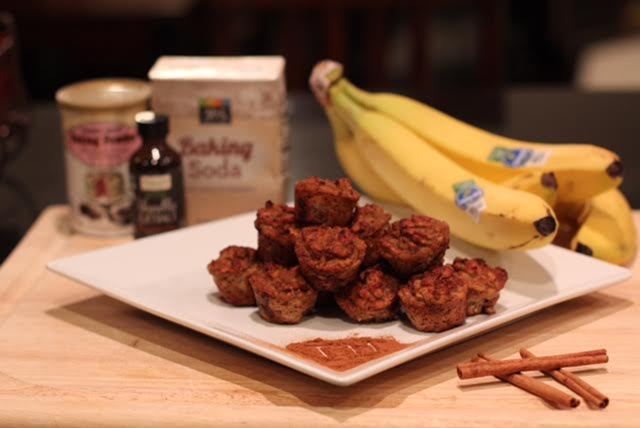
The Easiest, Tastiest Banana Mini Muffin Recipe Ever

by Liat Ron July 21, 2019
written by Liat Ron

Introducing the yummiest, most nutrient-dense muffins.

I don’t do well with recipes.

In fact, I can’t enjoy cooking unless I can spontaneously create something.

TAKING RISKS IN THE KITCHEN

It’s the one area in life where I’m an absolute gambler (the high and the rush included) and yes, my system makes it hard to recreate recipes, but I enjoy the reinvention process in my twisted way, especially when “accidents” result in better-than-the-original deliciousness.

My process usually consists of researching (thank you Google) the type of ingredients I’m inspired to use and making sure my crazy ideas will live at peace in one dish.

I’m no chef but I must have fun when I cook. Being an artist, I guess it will remain the only way for me.

Now, when it comes to baking, the stakes are high (AKA Are you crazy?!) Maybe that’s why I prefer cooking over baking. You just can’t mess with exact measurements and ingredients unless you’re trained. Or…can you?

Here’s the thing. What’s the worst that could happen? My baked goods would taste like crap and I wasted ingredients. It’s a small price to pay for the liberating fun I have in return, not to mention the gambling rush, not to mention the probably healthier component of enhancing faith and trust in myself. And so began my long personal journey with my go-to mini banana muffins…

I still have the original recipe symbolically crumpled up somewhere in the kitchen (never throwing that away) but at this point it’s not even a distant cousin of my current version, which is the healthiest, simplest, most nutrient-dense baked good I have created.

MY FAMILY, THE EAGER MUFFIN TASTE TESTERS

Safety first, I always practice on my family before anyone else. It’s been a little tricky because my 2.5 year old seemed to love all versions (the process began when she was 1), but my honest husband always saved the day.

Every batch I made was different, and unlike my cooking frenzy, this time I took down notes and modified accordingly. However, despite my utmost efforts to be an organized baker, now will be the first time I actually take the (or any) recipe out of my head and type it on my computer.

I am pleased to share with you the latest (though can’t swear the final) version of my Healthiest Banana Mini Muffins Recipe, but before we proceed, keep in mind that the only sweetener used is fruit. You will be pleasantly surprised, just like my sweet-toothed father-in-law, who is now addicted to them, but first I need to get it off my chest…right off the bat(ch).

b8407b45-163f-46c2-9a67-2e2ab1de6e4d

Child labor of love

MY KITCHEN HELPERS

On another note, I have enjoyed working with my new devoted assistant in the last couple of months. We use our beloved GuideCraft Kitchen Helper, which is easily tucked away in the kitchen when not needed.

I also can’t recommend enough the one item that changed how I feel about baking muffins, not to mention the clean-up (and with a toddler in the kitchen, every cleanup shortcut is the ultimate blessing).

My staple is this Silicone Mini Muffin Pan. The mother of all nonsticks, it’s also safest (food grade silicone), durable and extremely resistant to high temperatures (500 degrees Fahrenheit).

And once again, easiest cleanup. The muffins practically slide off. It’s like a little miracle.

One more staple is my chosen coconut flour. I have reviewed nutritional facts on all coconut flours on the market, and it turns out that Bob’s Red Mill Organic High Fiber Coconut Flour is the most nutrient-dense, if you will. For instance, it offers 10% of the recommended daily iron intake. None of the others offer any iron at all. And the way it smells when you open the bag also tells a story…

Make sure to watch out for organic almond flour. It costs about $50 for about 8 oz. No need! Almond flour is not only a profound ally in cooking and baking (makes everything taste like buttah), it also serves as a loyal provider of vitamin E, magnesium and protein. I like Bob’s almond flour but any brand would do just fine.

You don’t have to be a parent to enjoy baking, eating or feeding these mini-muffins, but it sure is a fun, educational activity with your children as the weather gets cold, not to mention it doesn’t involve screens.

This particular recipe is easily “contained” and will not wreak havoc on your kitchen. 

Children love these mini muffins, which can be easily converted to a OvenArt Bakeware Silicone 12-Cup Muffin Pan and isn’t it nice to know they are highly nutritious? A win-win.

banana muffins, kitchen helper, almond flour, coconut flour, superfood, baking with toddler

Our kitchen helper on her Kitchen Helper

You think I’ve said enough?…Let’s eat.

Here it is:

THE EASIEST, SWEETEST YET UNSWEETENED BANANA MINI-MUFFINS

Prep time: 10 mins (Note that kitchen helpers help make it longer….)
Cook time: 25 mins
Total time: 35 mins

Yield: 24 mini muffins

INGREDIENTS

3 large ripe bananas
2 eggs
1/4 cup unsweetened applesauce
1 1/4 teaspoon vanilla extract
1 tablespoons unsweetened vanilla almond milk
1/2 cup almond flour
1/2 cup coconut flour
1/4 teaspoon ground nutmeg
1/2 teaspoon ground cinnamon (less if you’re not a big fan)
1 1/2 teaspoon aluminum-free double acting baking powder
1 teaspoon baking soda

DIRECTIONS

Preheat oven to 375 degrees Fahrenheit.
In a medium mixing bowl, use a potato masher to mash the bananas. Add all wet ingredients and mix well after each one.
Slowly add the flour into the bowl and continue to mix well.
Add nutmeg, cinnamon, baking powder and baking soda and mix until batter is smooth.
Divide the batter between the 24 cups. Bake muffins for 25 minutes, or until a toothpick inserted into a muffin comes out clean.
Now clean up your drool and step away from the muffins if you want to watch them slide off. Let them cool in pan on a wire rack for at least 30 minutes before removing them. Muffins can be kept in the fridge for 3 days (I’m okay with a week if you are), longer in the freezer.
Bon appetit!

banana muffins, mini-muffins, superfood, almond flour, coconut flour, kitchen helper,

Yum! Let’s Eat!

July 21, 2019 0 comments
0 FacebookTwitterPinterestEmail
FeaturedHappinessHealthify FacebookSocial Media Lama Says

What Your Posting Style on Social Media Says About You

by Greg Kushnick, Psy.D. April 21, 2019
written by Greg Kushnick, Psy.D.

Finding Happiness via Social Media Series: Part Two

We began in Part One with the idea that you can significantly improve your happiness by focusing on gratitude posts.

We identified Facebook as a vehicle for enhancing your appreciation for the minutia of life and your “friends” on FB and in real life.

While your posting behavior on Facebook is not a true reflection of how often you experience gratitude behind the veil of your social media persona, it does offer a good place to start if you’re looking for an unconventional way to find greater happiness.

Using social media to live a happier life is an essential component of the techealthiest lifestyle.

Next we will go over the most important component of the lesson….

GRATITUDE POSTING HABITS: HOW TO BENEFIT FROM REFLECTION ON YOUR WALL

What types of people, places and events are easiest for you to express gratitude about on Facebook?

Is it easiest for you to thank a loved one for a birthday experience? Do you share how thankful you are for what your parent or grandparent has done to contribute to your happiness? Is it a no-brainer to share your appreciation for good food or a beautiful view of nature?

I’ve simplified the process of understanding your thankfulness posting habits by creating five “brands” of thankfulness so you can see where thankfulness comes easy for you and where you struggle.

I use the term ‘brand’ to honor our tendency to promote an image on social media that may deviate from how we think and feel in our private mental world. In the real world, our habits and thought patterns around thankfulness are probably closer to a style than a brand.

If we are totally honest with ourselves, we might conclude that we’re trying to project a certain image on Facebook, even with regard to how we show gratitude. The concept of a brand captures this need to appear a certain way to others.

The great news is that you are still contributing to raising your level of happiness even if you’re pretending to be thankful. You really don’t have to be 100 percent authentic with your thankfulness brand to reap the benefits of posting what you’re grateful for.

Creating a Facebook persona of spiritual superiority, for example, is certainly a lot healthier than an investment in looking like you only take perfect selfies.

So let’s get to the good stuff…

The Five Brands of Thankfulness on Facebook

Begin by identifying which, if any, of the five brands listed below reflects your Facebook posting habits. Note that there’s an incredible amount of overlap among the brands, meaning that you probably show different proportions of some or all of the brands.

If you don’t relate to any of the brands, well….pick one brand and post something ASAP to start building the habit of reflecting on how thankful you are even if you don’t fully feel it with every ounce of your being. Also note that I use the concepts of thankfulness and gratitude interchangeably to simplify this exercise.

1. The Public Kveller

To understand this brand, you have to know what the Yiddish word “kvell” means. (It happens to be my favorite word from any language.) To kvell is to feel extremely proud, but what makes this version of pride unique is that it refers to someone else’s qualities or accomplishments. You are experiencing the greatness of another without requiring recognition even if you play a role in it.

Facebook Habits: In my experience, Public Kvellers on Facebook tend to appreciate and post about the simple things in life. Since public kvelling directs the bulk of attention away from the speaker and toward someone else, public kvellers are often unselfish people who readily celebrate the good fortune of others. They are less threatened than their Facebook friends by posts that typically promote envy. Public Kvellers tend to be parents or pet owners, but not always. Extreme versions of the Public Kveller run the risk of living too vicariously through the lives of other people.

Examples: A kvelling parent would share with her Facebook friends how proud she is of her son who just graduated college with honors. A publicly kvelling dog owner would post pictures of her dog’s funny expressions and poses so others can enjoy them too.

The Social Media Lama says: The experience of kvelling is healthy to the extent that your intention is to direct attention toward someone else while basking in their greatness, as opposed to looking for Facebook friends to give you credit.

Have you kvelled lately?

2. The Reactive Thanker

We all have a Reactive Thanker in us. The question is whether reactive thanking represents your dominant way of expressing gratitude. Reactive Thankers are people who tend not to express gratitude unless something dramatic is given or taken. The Reactive Thanker may begin to live a more spiritually rich lifestyle if a powerful, new experience of gain or loss has inspired him to make more permanent changes in his perspective on life. The hope is that experience leads the Reactive Thanker to expand his range of expressions of gratitude beyond what pertains to just the one life-changing event.

Facebook Habits: Reactive Thankers tend to share thankfulness posts on Facebook in moments of achieving unanticipated, healthy perspective when sudden or unexpected events occur. Expressions of gratitude do not come easy for the Reactive Thanker. It takes a powerful experience to squeeze out a public expression of thankfulness from the Reactive Thanker. In fact, the Reactive Thanker sometimes finds himself annoyed by the thankfulness posts of others. In fact, he may be disgusted by public kvelling. Note that this brand doesn’t refer to people who make a conscious choice to post sparingly about what they are thankful for, but privately expresses gratitude with ease within the minutia of life.

The extreme version of the Reactive Thanker maintains a sense of the world (and his Facebook friends) as owing him something, and with this universal grudge comes unreasonable expectations of other people. These expectations include hoarding “likes” from his Facebook friends when he posts on Facebook, which temporarily determines his self-worth.

Examples: A Reactive Thanker doesn’t think to post how grateful he feels for how he benefited from a small act of kindness from a stranger, but will blow up your Facebook feed for days if someone donates a kidney to his father. (Ok, that’s a bit extreme, but you get the point!) A Reactive Thanker might feel irritated by your post about the amazing anniversary dinner you had with your significant other, but he would expect you to “like” his post about his father.

The Social Media Lama says: People who reserve expressions of gratitude for rare occasions or dramatic events tend to feel threatened and annoyed by the good fortune of others. If you believe that this brand fits your posting habits, consider dabbling in the other four brands to promote easier access to the mental health benefits of gratitude. Once again, the goal is to expand the range of situations in which you feel gratitude and gain a healthier perspective, even if it’s temporary.

3) The Self-Thanker

The Self-Thanker has a habit of publicly thanking people, God, fortuitous circumstances or whatever serves the purpose of making her look good. She may appear to be thankful just like everyone else, offering words of thanks to people who have helped her, but her intention behind the expression of gratitude is quite different than most people. You see the Self-Thanker is really trying to look good to others. In fact, looking good may be of greater importance than making sure someone is appropriately thanked.

Facebook Habits: The Self-Thanker has a knack for appearing like she is perpetually lucky, thriving, and living a celebrity’s lifestyle. Her Facebook feed is saturated with posts in which she always looks perfect. The Self-Thanker probably spent a good amount of time crafting her post to garner the most attention possible. Her posts are less about art and more about maintaining a certain image. Some artists may appear to be Self-Thankers, but the difference is that their primary intention is to create and celebrate art. Self-Thankers tend to expect that you will post your experience of gratitude toward what they’ve done for you. Name-dropping within thankfulness posts is a often a giveaway that the Self-Thanker is flexing her muscles. Some of the most successful people you know fall into this category.

In its extreme form, the Self-Thanker uses Facebook as a way to get as much attention and admiration as possible even at the expense of seeming unfeeling or self-indulgent. Similar to the extreme Reactive Thanker, extreme Self-Thankers also tend to believe that the world owes them something.

Examples: A Self-Thanker would thank Derek Jeter on Facebook for a career of greatness when it’s clear that the purpose of the post is to impress others by having VIP access to the Yankees’ clubhouse. A Self-Thanker would only post appreciative anniversary shots when the purpose is to show how expensive the meal was.

The Social Media Lama Says: Portraying the Self-Thanker in moderation can be extremely healthy if your intention is to learn to celebrate yourself more often or to practice expressing gratitude in a way that makes you look wise or spiritual. Shy or self-deprecating people can benefit from self-thanking Facebook posts since it promotes celebrating your positive traits.

4. The Romantic Thanker

Romantic Thankers frequently express their appreciation for the people they love. They are not afraid to share what they feel and tend to be hyperbolic in their speech. Their hearts are open and they have healthy access to the inner switch that floods them with gratitude. The Romantic Thanker tends to take chances with expressing thankfulness because he has learned that such verbalizations usually lead to benefits within his loving relationships. There are risks involved in being a Romantic Thanker, as some people might experience his thankfulness posts as over the top, sappy, or bragging. In its extreme form, the Romantic Thanker often finds himself celebrating love too soon in his relationships and ends of regretting public declarations of love when a relationship dies young.

Facebook Habits: The Romantic Thanker’s heart swells so large with love that he feels compelled to post. He doesn’t necessarily care that some of his Facebook friends will be rolling their eyes at how over the top his appreciative posts are. The Romantic Thanker tends to post a ton of photos when relationship milestones are reached and looks for other occasions in between to broadcast romantic experiences on your Facebook feed. Thanking others is usually not reserved for only for gifts received, but for all acts of loving kindness.

Examples: In a moment of spontaneous nostalgia, a Romantic Thanker would share photos and appreciative words right from the start of a romantic relationship. A husband would post a long, heartfelt message about his amazement over how amazing a mother his wife is to his children.

The Social Media Lama Says: The Romantic Thanker is not motivated by making other people jealous. Instead, he feels compelled to share with the world how grateful he feels based on how profoundly he is moved by a person, place, or event. Practicing romantic thanking on Facebook is healthy for relationships since it shows vulnerability and it tells the world you are not afraid to reveal the contents of your heart.

5. The Self-Actualized Thanker

The Self-Actualized Thanker has the knowledge, experience and humility to share what she is grateful for more readily than most people. It takes only a small act of kindness for the Self-Actualized Thanker to express gratitude. Facebook just might not be the preferred method of sharing how grateful she feels. The Self-Actualized Thanker much prefers to express her appreciation in person, but will share her thoughts on your Facebook feed when she deems it appropriate to do so. She is motivated by the idea of spreading knowledge, wisdom and kindness. Many Self-Actualized Thankers have endured painful life circumstances that have imbued them with an appreciation for the minutia of everyday life. They are not necessarily “stuck in the past,” and if they do look back in time, they focus more on what has been gained than lost. In its extreme form, the Self-Actualized Thanker may appear detached from society, and they run the risk of being seen by others as posting from a pedestal of spiritual superiority.

Facebook Habits: The Self-Actualized Thanker is keenly aware of her potential to make other people jealous so she avoids bragging and is willing to appear vulnerable on Facebook. In fact, she actually tends to reserve her time and energy for more productive activities than selfies. Similar to the Public Kveller, she wishes well to her Facebook friends and is not prone to jealousy based on other peoples’ good fortune. The trademark of the Self-Actualized Thanker is her appearance as having no ego. The Self-Actualized Thanker doesn’t require as many retakes of selfies as most people do. This is the person who is routing for you and celebrates your thankfulness posts with you no matter how showy or foolish you look. If you fill your Facebook friend list with Self-Actualized Thankers, you will find yourself inspired by their words and deeds.

Examples: A Self-Actualized Thanker would reflect in a Facebook post on something that a lost loved one has done to better the Thanker’s current reality. A Self-Thanker’s post about a specific act of kindness he witnessed would inspire you to be more humble, to look for the good in people, and to appreciate what you have at this very moment in your life.

The Social Media Lama Says: There is great value in practicing self-expression of the Self-Actualized Brand of Thankfulness on Facebook. Others might not know that this is your intention, but that shouldn’t matter. Do it for your own good. Look to the pain from the past to inspire you to share what you’re thankful for even if nothing noteworthy happened in the recent past. Celebrate the tiny joys of life and the people who teach and inspire you. Surprise your Facebook friends by sharing thoughts of gratitude generated from unexpected people and experiences. Remember, the Self-Actualized Thanker’s posts do not necessarily represent the best of the other four brands of thankfulness. Many of the self-actualized among us avoid posting anything that portrays them as boastful. They tend to appear humble and demure.

Again, take special caution not to appear spiritually superior to others, as your posts may have the opposite effect than what you intended to imbue in others.

Conclusion

Practice each of the 5 Brands of Thankfulness on Facebook. More importantly, practice their expression in real life. Remember that these brands represent tendencies. They are meant to offer you a way to expand your range of experiences of gratitude in virtual space and face-to-face. This will lead to more opportunities to enter a positive state. At the same time, you are strengthening your connection to the people who matter most to you, especially when gratitude is expressed in person.

Best,

The Social Media Lama in Dr. Greg

(Note: Please know that I used gratitude and thankfulness interchangeably, even though they mean very different things, but a discussion of the differences would require a lengthy explanation meant for another time. For simplification’s sake, think of gratitude as a higher state of being, a grand appreciation of what is, something that promotes spiritual health. Think of thankfulness as an expression of appreciation typically following something that is given. Once again, I used thankfulness here to mean both. Refer to the links below for a more detailed explanation.)

Brainy Quote on Thankfulness and Gratitude

Grateful and Thankful…What’s the Difference?

April 21, 2019 0 comments
0 FacebookTwitterPinterestEmail
Newer Posts
Older Posts

Inside Your Personal Digital World

  • What Your Posting Style on Social Media Says About You

    April 21, 2019
  • A Secret Door to Happiness is Written on Your Wall

    October 2, 2015
  • The Real Reasons You’re Stingy with Your Facebook Happy Birthday Wishes

    July 3, 2015

Copyright 2025.  We are dedicated to protecting the privacy of our readers.


Techealthiest | The Technology of Mental Health
  • Mental Change Tech
    • Happiness
      • Habit Shifter
      • Smartest Future
    • Stress
      • Human-Phone Bond
  • Parent Thing
  • Social Media Lama
    • Love Optimizer
    • App Dating
    • Healthy Selfie
    • Healthify Facebook
    • Enlightened Upgrading
  • Narcissist Mgmt
  • Phone Love
  • Covid
    • The Bright Side
  • About
    • About Techealthiest
    • About Dr. Greg
    • The Techealthiest Mission
    • Privacy Policy
    • Terms of Use
    • Contact
Techealthiest | The Technology of Mental Health
  • Mental Change Tech
    • Happiness
      • Habit Shifter
      • Smartest Future
    • Stress
      • Human-Phone Bond
  • Parent Thing
  • Social Media Lama
    • Love Optimizer
    • App Dating
    • Healthy Selfie
    • Healthify Facebook
    • Enlightened Upgrading
  • Narcissist Mgmt
  • Phone Love
  • Covid
    • The Bright Side
  • About
    • About Techealthiest
    • About Dr. Greg
    • The Techealthiest Mission
    • Privacy Policy
    • Terms of Use
    • Contact
@2021 - All Right Reserved. Designed and Developed by PenciDesign